AK-1 fighter jets kick-start Turkic summit in Kazakhstan
Last week’s aerial display in Astana marked the beginning of a high-stakes diplomatic dance between Kazakhstan and its Turkic neighbours. President Kassym-Jomart Tokayev welcomed multiple leaders of Turkic states to Kazakhstan, a move aimed at strengthening cultural ties and boosting trade between the partner nations.
The display of AK-1 fighter jets over the Kazakh capital set the tone for a two-day summit focused on promoting Turkic cooperation. While the event was meant to showcase the shared cultural heritage of the partner nations, there was a clear undercurrent of a more tangible agenda: defense cooperation. President Tokayev remained tight-lipped on this aspect, leaving the details for future discussion.
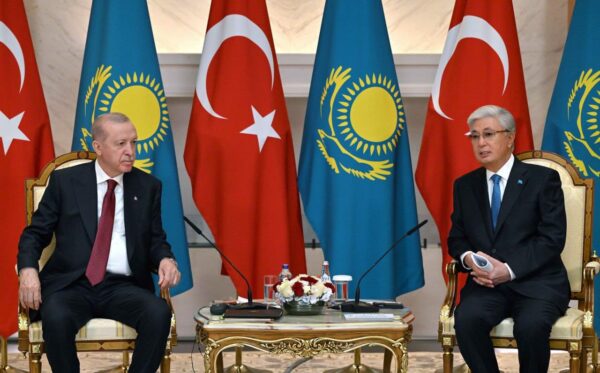
Turkish President Recep Tayyip Erdoğan was among the key leaders in attendance, joining heads of state from Azerbaijan, Kyrgyzstan, Uzbekistan, and Turkmenistan. The summit’s primary objective was to revive and strengthen ties between the Turkic nations, fostering a sense of solidarity and cooperation. However, the elephant in the room was the potential expansion of defense cooperation, a development that could have far-reaching implications for regional security.
Trade and Economic Ties Take Center Stage
Beyond the diplomatic niceties, the summit aimed to boost trade and economic cooperation between the partner nations. Kazakhstan, a major producer of oil and natural gas, is keen to increase its energy exports to the region, while countries like Turkey and Azerbaijan are eager to tap into Central Asia’s vast energy resources.
The Kazakhstan-Turkey trade relationship is particularly noteworthy, with bilateral trade volumes reaching $4 billion in 2022. The two nations have also agreed to establish a special trade corridor, facilitating the exchange of goods and services between their economies.
A Delicate Balance
While the summit marked a significant step forward in promoting Turkic cooperation, it’s not without its challenges. Countries like Kyrgyzstan and Turkmenistan have been wary of getting too close to any single nation, fearing that it may compromise their sovereignty. Meanwhile, the expansion of defense cooperation is likely to face resistance from Russia, a key player in the region’s geopolitics.
What this means: As Kazakhstan and its Turkic neighbors deepen their ties, regional dynamics are set to become increasingly complex. The delicate balance between trade, culture, and defense cooperation will require careful choreography to avoid antagonizing other key players in the region.