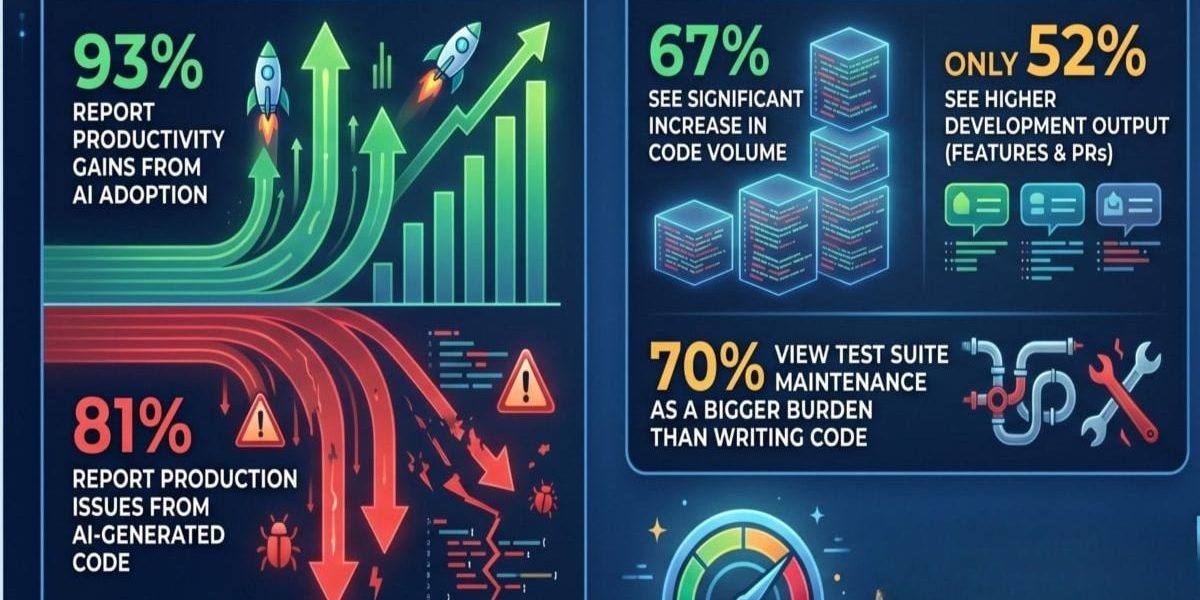
Productivity Gains Come with a Catch: AI-Driven Production Issues Skyrocket
A recent survey of 213 IT leaders conducted by CloudBees reveals some unsettling news: while nearly 9 in 10 say they’re enjoying productivity gains thanks to AI adoption, almost 8 in 10 are experiencing a surge in production issues.
The survey highlights a worrying trade-off: as companies increasingly rely on AI to automate tasks and streamline processes, they’re also encountering a host of new problems. For instance, 63% of respondents reported that AI-driven tools have introduced new errors, while 55% said they’ve seen an increase in complexity.
Among the most common production issues cited were integration problems (44%), inadequate training data (42%), and a lack of oversight (36%). It’s not all doom and gloom, though: a full 83% of respondents said their teams are better equipped to handle AI-related issues due to increased training and education.
What This Means: Don’t Overlook the Human Factor
So what does this mean for the average user? In short, it means that AI adoption is a double-edged sword. On one hand, AI can bring significant productivity gains and automate tedious tasks. On the other hand, it can introduce new risks and complexities that need to be carefully managed.
To make the most of AI, companies need to invest in proper training and education for their teams. This includes not just technical skills but also critical thinking and problem-solving abilities. After all, AI is only as good as the data it’s trained on and the oversight it receives.
The Road Ahead: Balancing Productivity and Risk
As companies continue to push the boundaries of AI adoption, they’ll need to find a balance between productivity gains and risk management. By acknowledging the challenges and investing in the right tools and training, they can unlock the full potential of AI without sacrificing the human touch.
For now, it’s clear that AI adoption is a journey, not a destination. With the right mindset and strategies, companies can harness the power of AI to drive real productivity gains – and minimize the risks that come with them.