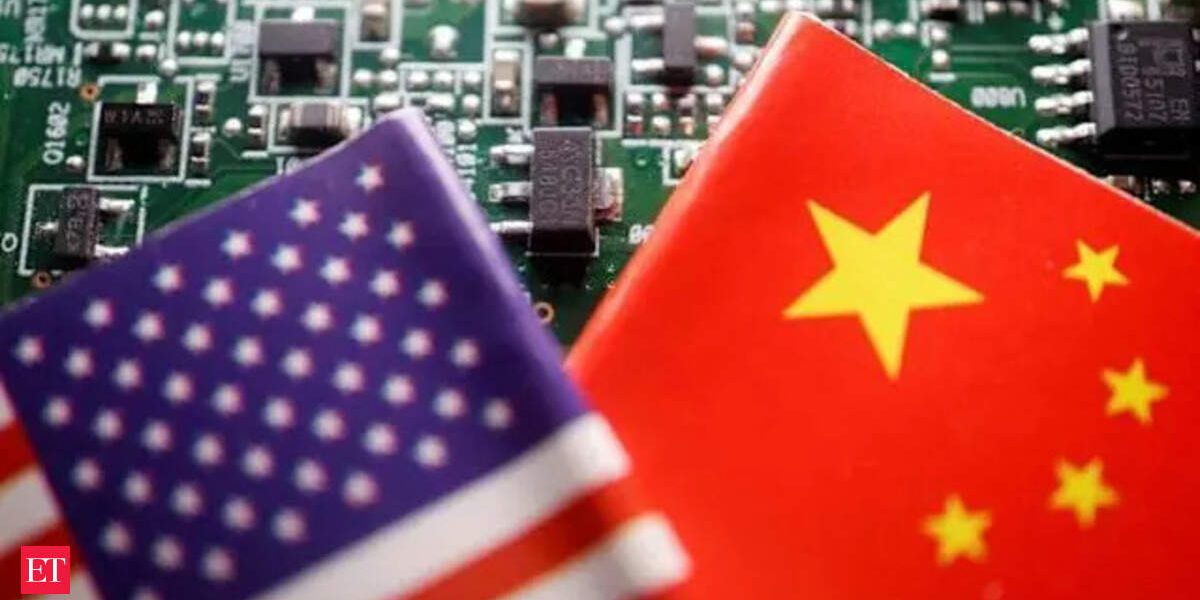
US-China Tech Rivalry Heats Up Over AI and Chips
A new chapter in the long-standing US-China trade war has unfolded, with artificial intelligence (AI) and semiconductor chips at its core. The world’s largest two economies are now locked in an intense technology battle, and it’s not just about trade; it’s about who will lead in the development and control of these critical technologies.
AI and Chip War Escalates
The US government has imposed increasingly stringent export controls on AI and chip technologies, significantly constraining China’s access to these crucial components. China, in response, has accelerated its efforts to develop its own AI and chip industries, with President Xi Jinping’s ‘Made in China 2025’ initiative at the forefront. This plan aims to make China a global leader in AI and chip production by 2025.
Global Supply Chains in the Crosshairs
As tensions rise, global supply chains are feeling the strain. The US government is blocking China’s access to AI and chip technologies, making it harder for Chinese companies to develop their own products. This, in turn, could disrupt global supply chains, impacting industries that rely heavily on these technologies, such as robotics and autonomous vehicles.
The Stakes are High
The AI and chip war is not just about national pride or economic interests; it’s about security. Advanced technologies like AI and chips have the potential to give the winner a significant military advantage. The US and China are vying for dominance in these areas, with the winner likely to hold significant sway over global technology and security landscapes.
What this means
For consumers and businesses, the AI and chip war may seem like a distant issue, but its implications will be felt across the globe. As the world’s two largest economies engage in a high-stakes technology battle, it’s essential to understand the significance of this rivalry and its potential impact on the global economy and security.