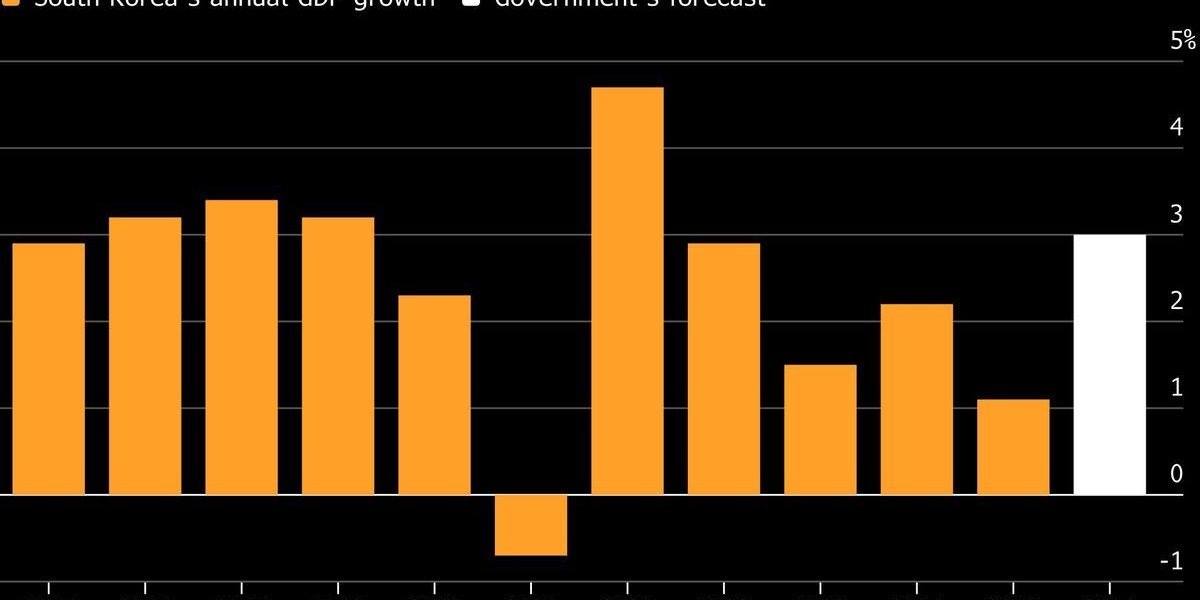
South Korea’s government is betting big on a boom in chip production driven by artificial intelligence, defying the International Monetary Fund’s more pessimistic forecast for the economy.
The country’s economic planners have been optimistic about the future of the tech industry for a while now, but recent developments have only strengthened their resolve. Seoul’s semiconductor sector has been on the upswing, thanks in large part to increasing demand from AI startups and companies investing heavily in machine learning and natural language processing.
Chip Boom Fuels Economic Optimism
An analysis of the South Korean government’s latest economic assessment shows that officials are pinning their hopes on the nation’s ability to maintain its position as a global leader in semiconductor production. The country’s tech industry has been a major driver of GDP growth in recent years, and the government is hoping that this trend will continue.
As Lee Jae-yong, the vice chairman of Samsung Electronics, one of the country’s largest and most influential conglomerates, pointed out in a recent interview, the AI-driven boom in chip production is creating new opportunities for South Korean businesses to expand their operations and invest in research and development.
Achieving Balance Between Optimism and Reality
However, not everyone is convinced that the chips boom will continue to drive the economy indefinitely. IMF economists have pointed out that the country’s economy still faces significant challenges, including high levels of household debt and a widening trade deficit.
In a recent report, the IMF noted that the country’s economic growth is likely to slow down in the coming years, citing a range of factors including a decline in exports and a slowdown in domestic demand.
What this means: South Korea’s government is taking a big bet on the continued growth of the chip industry, but it remains to be seen whether this optimism will be rewarded. As the country’s economy navigates a period of significant change, it’s crucial for policymakers to strike a balance between optimism and reality.