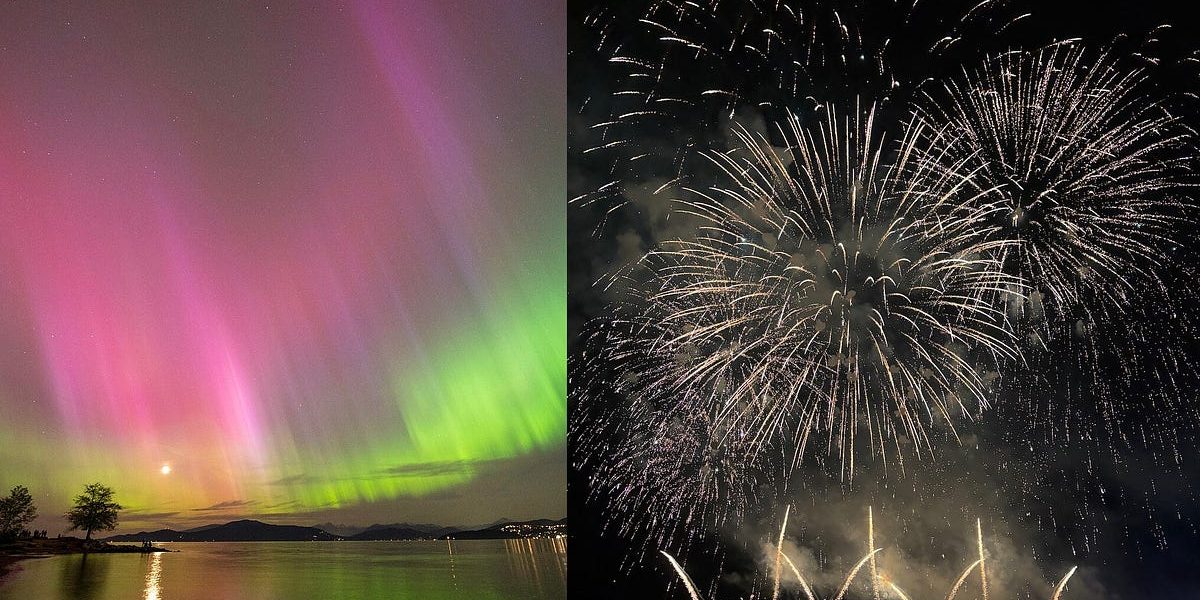
Imagine witnessing over 800,000 fireworks exploding in a single hour, a spectacle that would light up the night sky with a kaleidoscope of colors. This is the sheer scale of some of the world’s largest fireworks shows, but have you ever wondered how they compare to natural light displays, such as aurorae, that dance across the polar skies?
Auroral Displays: The Natural Light Show
Aurorae, also known as the northern or southern lights, are breathtaking displays of light that occur when charged particles from the sun interact with the Earth’s magnetic field and atmosphere. These interactions result in spectacular shows of colored light that can be seen at high latitudes.
The energy released by aurorae is significant, with some estimates suggesting that a single auroral display can release around 1-2 gigawatts of power. However, to put this into perspective, a typical fireworks show might have a peak power output of around 100-500 megawatts. So, while fireworks displays are certainly impressive, they pale in comparison to the raw energy of aurorae.
Comparing Fireworks to Aurorae: What This Means
So, what does this comparison mean for us? For one, it highlights the awe-inspiring power of natural phenomena. While we can create elaborate light displays with fireworks, there’s something humbling about the sheer energy and scale of aurorae. It’s a reminder that there’s still so much we can learn from and appreciate about the natural world.
Scaling Up: The Future of Light Displays
As technology continues to advance, we can expect to see even more spectacular light displays, both natural and artificial. New technologies, such as drone shows and laser light displays, are pushing the boundaries of what’s possible. But even as we explore new ways to create our own light shows, it’s worth remembering that nature still has a lot to teach us about the power and beauty of light.