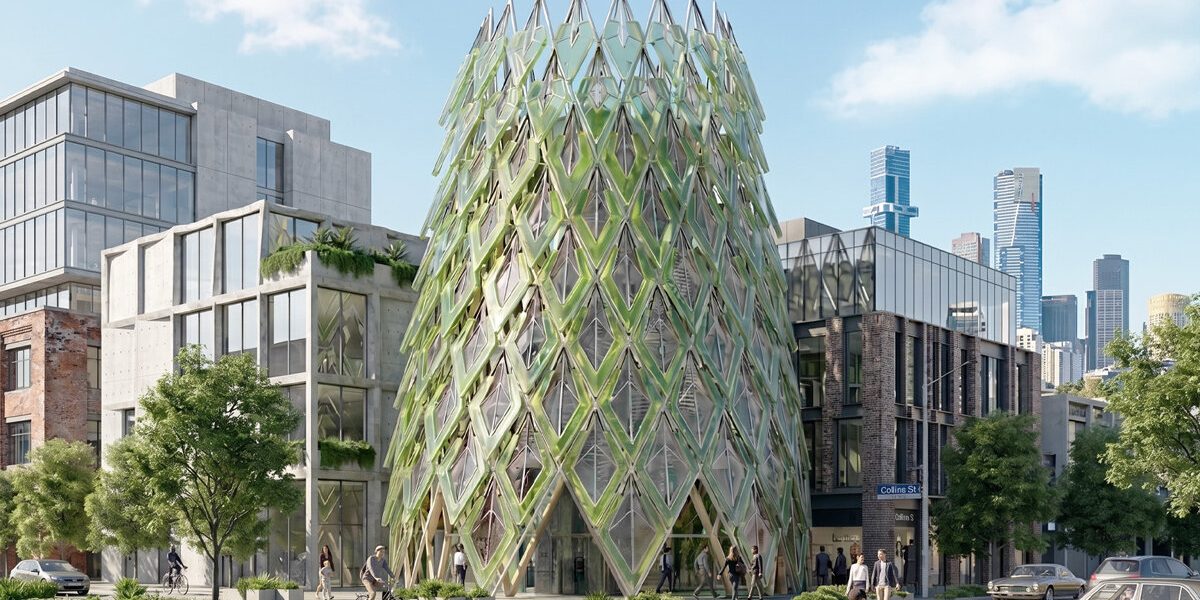

Uau Studio’s Algae Tower concept challenges the traditional glass skyscraper with a living, breathing facade that generates energy, adapts to changing light conditions, and even grows its own skin.

Inspired by the behavior of tree canopies, the Algae Tower’s bio-facade uses photo-bio-reactor technology to mimic the way plants convert sunlight into energy. This bio-reactor system integrates algae that absorb CO2 and produce oxygen, generating power while reducing the building’s carbon footprint.
Gianluca Santosuosso, lead designer at uau studio, explains the concept behind the Algae Tower:
“The traditional glass building envelope is not only inefficient but also contributes to the urban heat island effect. Our goal was to create a facade that not only responds to environmental factors but also generates energy and improves air quality.”
According to uau studio, the Algae Tower’s bio-facade can produce between 10-20% of the building’s energy needs, significantly reducing its reliance on fossil fuels. The system also provides thermal insulation, minimizing heat loss and reducing energy consumption.
Practical Applications
While the Algae Tower concept is still in the design phase, its potential to integrate sustainable technology into urban architecture is significant. As cities continue to grow and urbanization increases, the need for more efficient and environmentally friendly buildings will only continue to rise.
Future Possibilities
The Algae Tower’s innovative use of photo-bio-reactor technology has far-reaching implications for the built environment. Imagine buildings that not only generate their own energy but also contribute to a healthier urban ecosystem.
The Algae Tower concept is a promising step towards a more sustainable future, one that reimagines the urban landscape through the integration of living, breathing architecture.