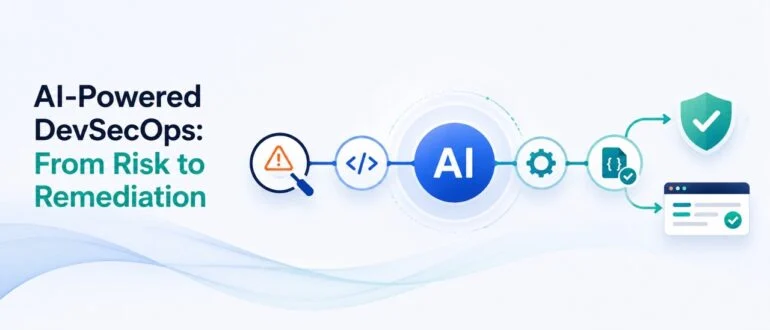
Artificial Intelligence-powered security tools are now able to fix issues in software code before they even make it to production.
**Automated Code Fixes**
The latest innovation in DevSecOps (Development, Security, and Operations) has emerged from advancements in AI technology. This shift marks a significant departure from the traditional approach of merely detecting vulnerabilities in software code. Today, AI is proactively resolving these issues within the software delivery pipeline. Organizations like **Microsoft**, **Google**, and **Amazon** are already experimenting with AI-driven automation in their DevSecOps processes.
**From Detection to Resolution**
Historically, security teams relied heavily on manual testing and code reviews to identify vulnerabilities in software development. However, as the volume of codebases grew exponentially, the sheer scale of the task became unsustainable. The introduction of AI has streamlined this process, enabling security tools to not only detect vulnerabilities but also suggest corrections and even apply patches directly within the code. This proactive approach reduces the risk of vulnerabilities making it to production, thereby minimizing security breaches and the associated costs.
**What this means**
As AI becomes increasingly integral to DevSecOps, organizations will need to adapt their security strategies. This includes investing in AI-powered security tools and training developers to work in an environment where security is automated. Furthermore, they’ll need to reevaluate their risk management frameworks to account for the reduced likelihood of security breaches. The payoff, however, will be significant: reduced development time, improved code quality, and enhanced overall system reliability. By embracing AI-driven DevSecOps, companies can now build more secure software with greater speed and efficiency.