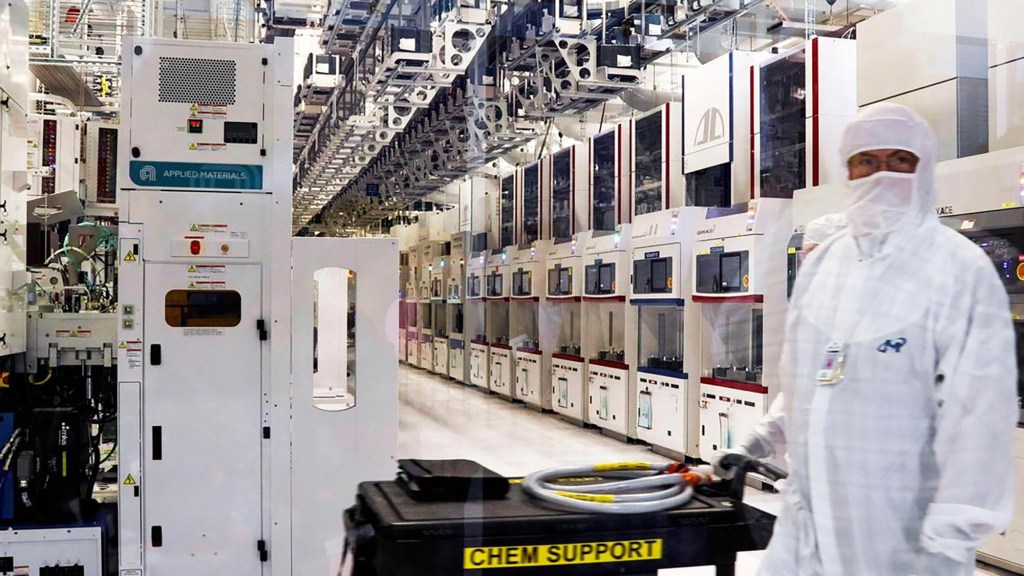
Chipmakers globally are on edge as they face a massive shortage of memory chips, exacerbated by the artificial intelligence boom. The shortage has caused widespread disruptions, from crippling supply chains to driving up costs.
The semiconductor industry group, representing major players like Micron, Samsung, and SK Hynix, sent a stern warning to governments worldwide: any attempts to interfere with the market would only make things worse. The group argues that government attempts to address the shortage by influencing prices or production capacity would lead to unintended consequences.
The Complex Web of Supply and Demand
The AI boom has created unprecedented demand for memory chips, which are used in AI-powered devices like servers, smartphones, and laptops. As a result, manufacturers are scrambling to increase production, but it’s a difficult task. Investing in new capacity takes time and significant resources, and there’s limited room for expansion.
The situation is further complicated by the ‘Moore’s Law’, which states that the number of transistors on a microchip doubles approximately every two years, leading to exponential improvements in computing power and reductions in cost. However, this has also led to a situation where manufacturing processes are becoming increasingly complex, making it harder for chipmakers to keep up with demand.
Avoiding Unintended Consequences
The semiconductor industry group is urging governments to exercise restraint and avoid interfering with the market. They argue that attempts to control prices or production capacity could lead to unintended consequences, such as:
Price volatility: Artificially manipulating prices could create market uncertainty, making it harder for manufacturers to plan and invest in new capacity.
Investment uncertainty: Interfering with the market could discourage investment in new manufacturing capacity, exacerbating the shortage in the long run.
What this means
The chip shortage isn’t going away anytime soon, and governments will need to tread carefully to avoid making things worse. Manufacturers will continue to face significant challenges in meeting demand, and consumers can expect higher prices or reduced availability of AI-powered devices. The industry’s warning serves as a reminder of the complex web of supply and demand that underlies the global semiconductor market.