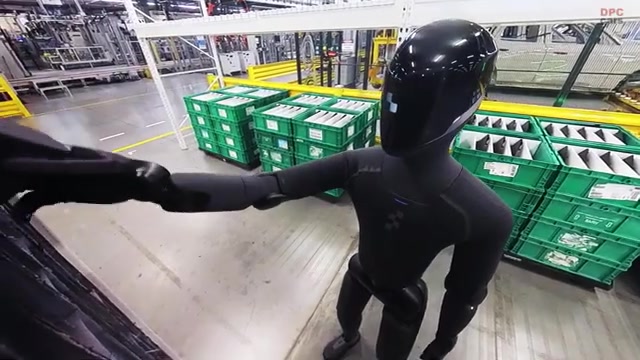
BMW has been quietly putting its Figure 03 humanoid robot to work in the parts logistics area of its manufacturing facilities.
A New Role for Robotics in Factory Operations
The Figure 03, developed with AI startup Figure AI, is taking on tasks that were previously done by human employees, like retrieving and moving parts around the factory floor. This is a departure from earlier robotics experiments in the automotive industry, which focused on more visible and dramatic capabilities like welding and assembly.
Figure 03’s abilities are more subtle, but potentially just as impactful. The robot can move around the factory with ease, using its humanoid shape to navigate tight spaces and interact with its human coworkers. It can pick up parts with precision and even recognize when they’re misplaced, making it a valuable asset in the often chaotic world of factory logistics.
What This Means
The introduction of Figure 03 in the parts logistics area is a significant development, as it represents a new direction for robotics in the automotive industry. It highlights the potential for robots to take on tasks that are often mundane, but essential to the smooth operation of a factory.
According to BMW, the goal of the Figure 03 experiment is to improve efficiency and reduce costs in the manufacturing process. By automating tasks that were previously done by humans, the company hopes to reduce waste, minimize errors, and streamline its operations.
A New Era in Factory Automation
The success of the Figure 03 experiment could have far-reaching implications for the automotive industry, and beyond. As robots like Figure 03 become more prevalent in factory settings, we can expect to see increased automation and efficiency in a range of industries, from manufacturing to healthcare and beyond.
BMW’s experiment with Figure 03 is a reminder that the future of work is being shaped by advances in AI and robotics, and that the possibilities for automation are vast and varied.