
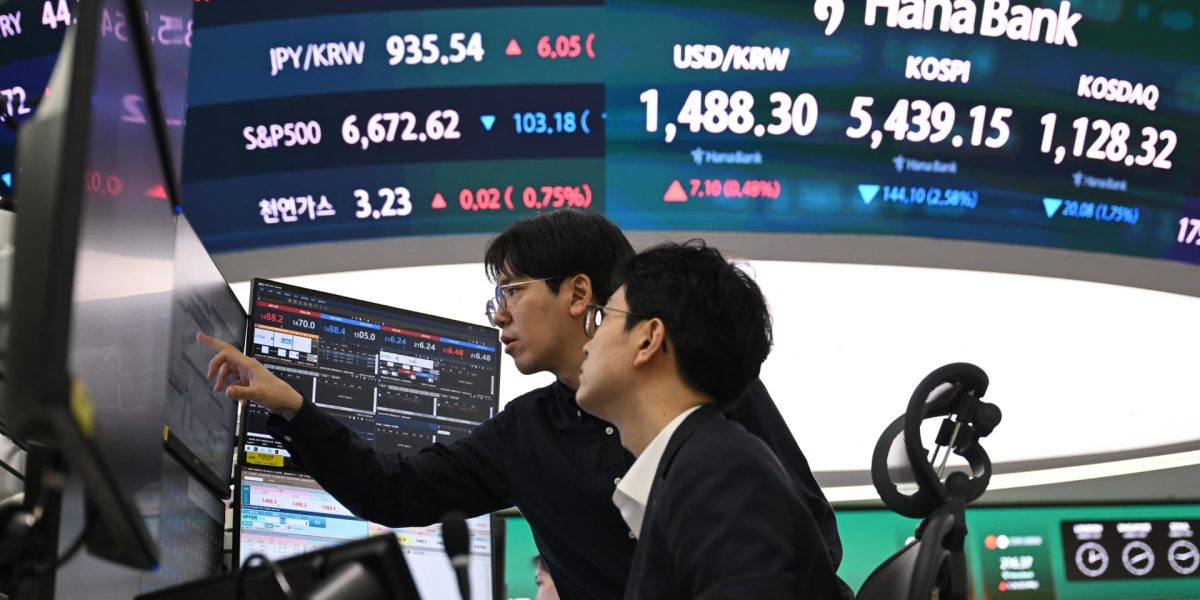
South Korean Stocks Reel from Record-Breaking Foreign Sell-Off
South Korea’s stock market volatility is at an all-time high, with the KOSPI index plummeting in response to a historic $13.2 billion selloff by foreign investors last week. This staggering amount, which accounted for roughly 25% of the country’s entire foreign investment portfolio, has left markets reeling.
The selloff, which is the largest on record, has sparked fears of a broader market collapse, as investors rush to exit the country due to economic and geopolitical uncertainty. South Korean officials have scrambled to reassure the public, stating that the government is prepared to intervene if necessary to stabilize the market.
The sell-off is also having a ripple effect on the broader economy, with analysts warning of potential job losses and a slowdown in economic growth. The central bank, the Bank of Korea, has been working to stabilize the currency, which has also taken a hit, dropping to a 13-year low against the US dollar.
Largest Foreign Investment Exit in South Korea’s History
The $13.2 billion selloff is the largest on record, eclipsing even the massive sell-off that occurred during the 1997 Asian financial crisis. This sudden and unexpected exodus has caught South Korean officials off guard, with many left scrambling to understand the reasons behind the sudden flight of foreign capital.
What this means for South Korean Investors
For South Korean investors, this volatility presents a daunting landscape. With foreign investors pulling out in droves, it’s unclear whether local investors will be able to stem the tide. For now, the market remains in a state of flux, with many questioning what this means for their long-term investments. As the situation continues to unfold, one thing is clear: this is a challenging time for South Korean investors.