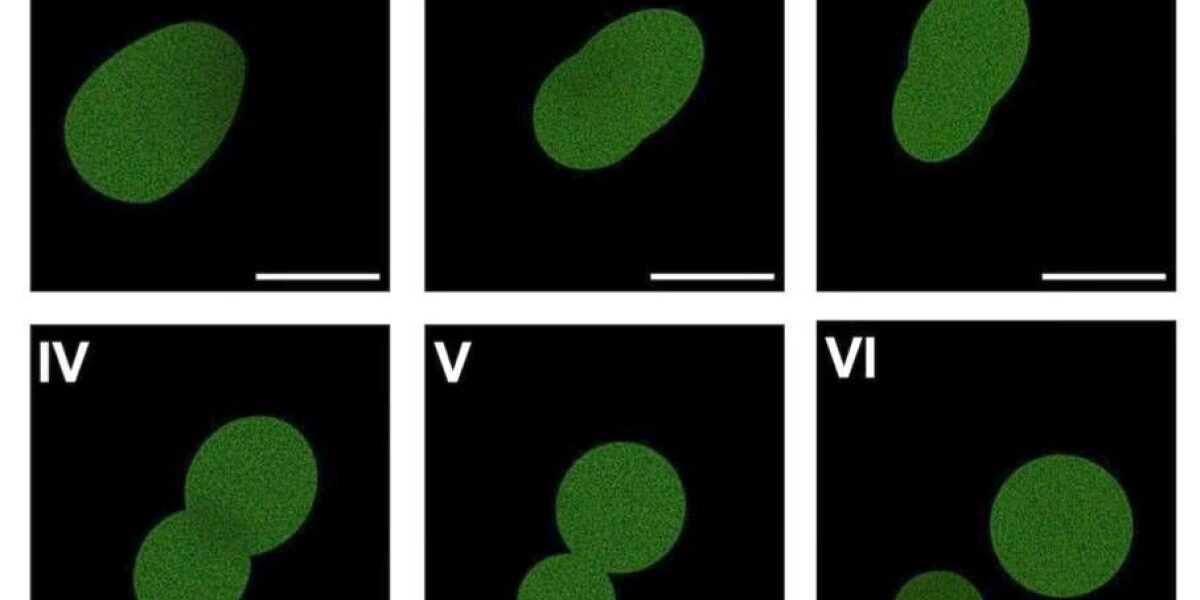
A team of scientists in Minnesota has just engineered a synthetic cell that can grow, divide, and even outcompete its peers – a feat that’s been called the first fully realized artificial cell with a complete life cycle.
Meet SpudCell
SpudCell, as the team has named it, is not a living organism, but rather a sophisticated piece of bioengineering. However, its remarkable capabilities make it a potential game-changer in fields ranging from biotechnology to synthetic biology.
The creation of SpudCell marks a significant shift in the study of artificial cells, which has been ongoing for years. By constructing a cell from scratch, the researchers have been able to understand and replicate the intricate processes that govern life at a cellular level.
How SpudCell Works
SpudCell is built using a combination of genetic material and fatty molecules, which are designed to mimic the structure and function of a natural cell membrane. The scientists behind the project have successfully programmed the artificial cell to perform a range of tasks, including feeding, division, and even competing with its peers for resources.
The researchers used a combination of computational modeling and experimental techniques to design and construct SpudCell. They’ve also been able to study the cell’s behavior in real-time, allowing them to make adjustments and improvements as needed.
What This Means
The implications of SpudCell are far-reaching, with potential applications in fields as diverse as medicine, agriculture, and environmental engineering.
For example, artificial cells like SpudCell could be used to develop new therapies that can target specific diseases or conditions, or to create more efficient systems for producing biofuels or other sustainable resources.
While SpudCell is not truly alive, its creation represents a major milestone in the field of synthetic biology and could pave the way for future breakthroughs in bioengineering.