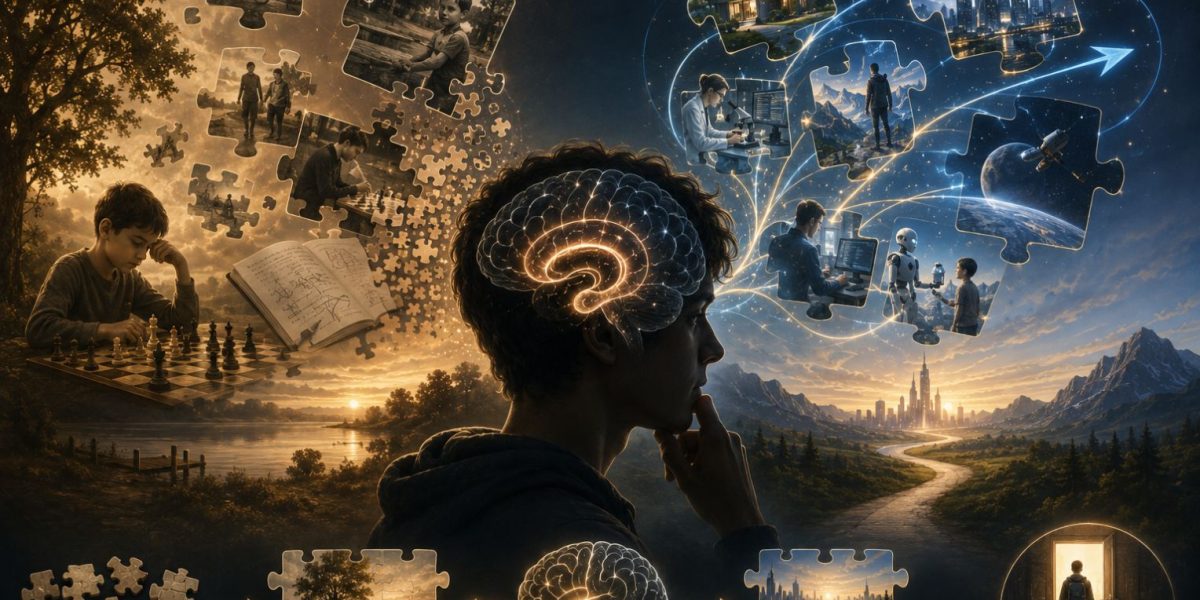
Researchers have made a groundbreaking discovery about the human brain’s ability to imagine the future, revealing that it constructs these visions by combining fragments of real experiences – a process eerily similar to how we remember the past.
According to the research, when we try to imagine something we’ve never experienced, our brains struggle to create a coherent picture. This is because we rely solely on the memories of real sensations, like the feeling of wind on our skin or the taste of a favorite food. The brain essentially “rebuilds” the future from the pieces of the past, using what’s familiar to fill in the gaps.
A Window into the Brain’s Constructive Nature
Lead researcher, Oliver Burkhard, explained that this process is not unique to imagination, but is also the basis for how we remember past events. “When we recall a memory, our brains are not simply playing back the original experience,” he said. “Instead, we’re actively reconstructing it from the fragments that are left in our brain.”
This insight has significant implications for our understanding of the human brain’s creative potential. If our ability to imagine the future is limited to what we’ve experienced in the past, it raises questions about the nature of creativity and innovation. Can we truly imagine new possibilities, or are we forever bound by the limits of our past experiences?
The Future of Imagination
What this means for us, however, is that our brains are capable of incredible feats of construction, even if they are based on incomplete or fragmented information. This has implications for fields like art, design, and even science, where imagination and creativity are essential components of innovation.
The researchers’ findings suggest that, while our ability to imagine the future may be limited in certain ways, it is still a powerful tool that can be harnessed and nurtured. By understanding how our brains construct visions of the future, we may be able to unlock new creative potential and push the boundaries of what is possible.
The Boundaries of Imagination
While the researchers’ discovery offers a fascinating glimpse into the workings of the human brain, it also raises important questions about the nature of imagination and creativity. Can we truly imagine new possibilities, or are we forever bound by the limits of our past experiences?
As we continue to explore the mysteries of the brain, one thing is clear: the human capacity for imagination is a powerful force that deserves further study and understanding.