Scientists Uncover Secret to Brain Cell Organization
A single cell, roughly equivalent in size to the dot at the end of this sentence, gives rise to the human brain – an astonishingly complex organ containing roughly **170 billion cells**. This fundamental question has puzzled neuroscientists for decades, but now a recent discovery offers a glimpse into how this incredible feat is achieved.
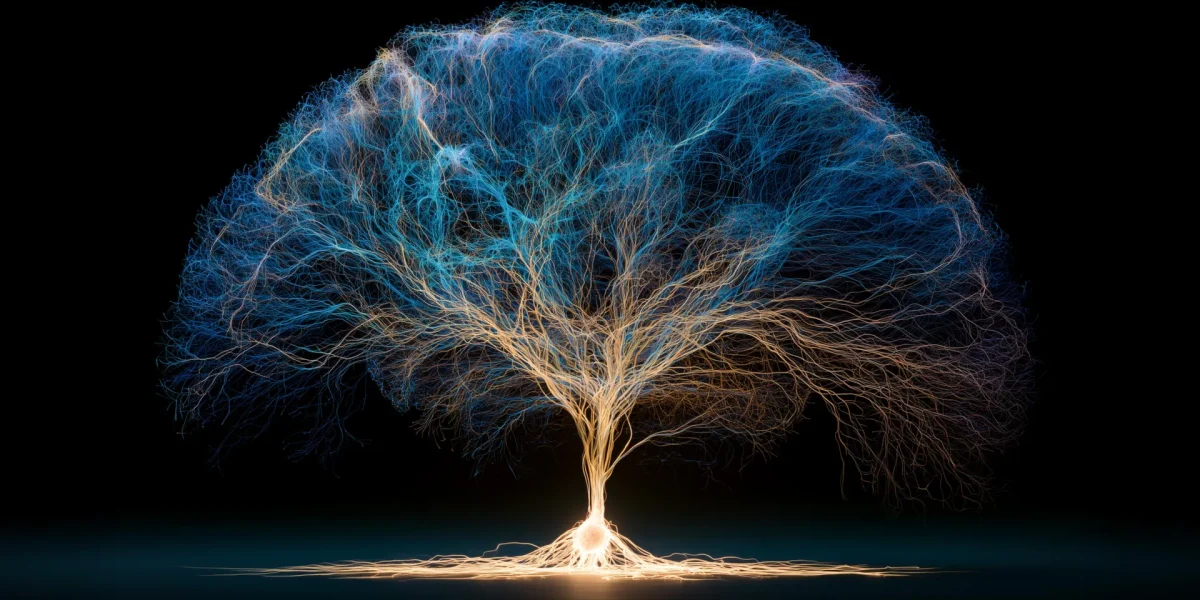
Researchers have found that brain cells use their lineage, or cellular family tree, as a sort of positional map to organize themselves within the developing brain.
The Importance of Lineage
This means that cells that share a common ancestor tend to stay near one another, helping to establish a pattern of organization that will eventually give rise to the intricate networks of neurons and their supporting cells. This idea is reminiscent of how families often cluster together in neighborhoods, with relatives living close to one another.
Implications for Our Understanding of Brain Development
This research provides a fresh perspective on how the brain develops, highlighting the critical role that cell lineage plays in shaping the brain’s architecture. By understanding the mechanisms that govern brain cell organization, scientists may be able to identify new targets for therapeutic interventions in neurological disorders, such as neurodegenerative diseases or autism spectrum disorder.
What this means
While this discovery may seem abstract, its implications for our understanding of brain development and its disorders are significant. By pinpointing the cellular mechanisms that govern brain organization, researchers may be able to develop more effective treatments for conditions that have long been poorly understood. This could lead to improved outcomes for patients and a deeper understanding of how the human brain functions.
Dr. David J. Anderson, a neuroscientist at the California Institute of Technology, was not involved in this research but commented on its significance, saying that “this work highlights the remarkable ability of cells to use their history to organize themselves in complex patterns.”