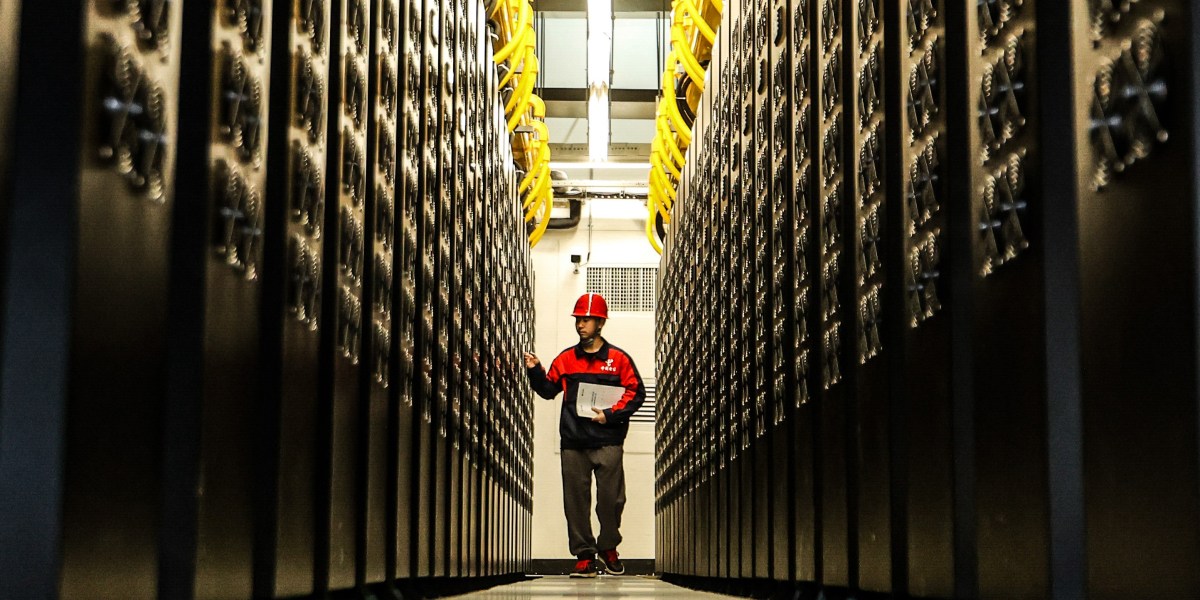
China’s LineShine computer in Shenzhen has surpassed the top-ranked U.S. supercomputer El Capitan in the latest TOP500 ranking, grabbing the title of world’s most powerful supercomputer for the first time since 2017. This significant shift marks a milestone in the global supercomputing landscape and underscores China’s growing investment in AI and high-performance computing.
According to the TOP500 list, which is widely regarded as a benchmark for supercomputing power, the LineShine computer has managed to outperform El Capitan, a behemoth of a machine that has held the top spot since 2021. The LineShine’s impressive performance is attributed to its state-of-the-art architecture and advanced cooling system, which enable it to process massive amounts of data at unprecedented speeds.
What drives China’s supercomputing ambitions?
China’s ascendancy to the top spot in the TOP500 list reflects its long-term strategy to become a leader in AI and high-performance computing. The country has invested heavily in its National High-Performance Computing and Networking Infrastructure, a program aimed at building a robust network of supercomputers to support AI research, scientific simulations, and other applications. This effort has enabled China to develop a robust ecosystem of researchers, engineers, and developers who are driving innovation in supercomputing and AI.
What this means for the global tech landscape
The LineShine’s achievement has significant implications for the global tech industry, particularly in the fields of AI, scientific research, and high-performance computing. As China continues to push the boundaries of supercomputing, it’s likely to drive innovations in areas like climate modeling, materials science, and healthcare. Moreover, this development underscores the increasing competition between governments and tech powers to harness AI and supercomputing for strategic and economic gains. The stakes are high, and the outcome will have far-reaching consequences for industries, economies, and societies worldwide.