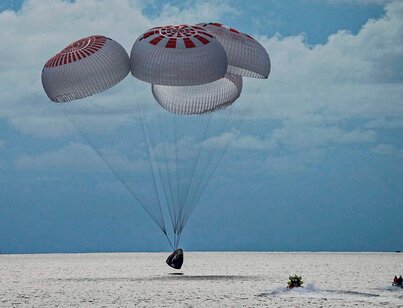
SpaceX just launched a futuristic, disk-shaped cargo return capsule called Starfall on its first demo flight, aboard a Falcon 9 rocket, on June 23, 2026.
A New Path for Rapid Cargo Return
Starfall is the first of its kind: a flat, low-profile vehicle, measuring approximately 3.1 meters in diameter and 0.75 meters in height. According to SpaceX, this design allows for the rapid, high-volume return of cargo. The Starfall capsule can carry up to ~4,000 pounds (1,814 kilograms) of payload, setting it up as a key player in the future of space-based cargo transport.
A Step Towards Crewed Missions
While Starfall is designed as an uncrewed vehicle for now, its technology has the potential to lay the groundwork for future human-rated versions. SpaceX is already working on developing a crew-capable variant of the Starfall design, with the goal of providing a safe and reliable way to return astronauts from space. This is a critical step towards establishing a human presence on the Moon and beyond.
What this means
The implications of Starfall are significant, as it represents a major leap forward in the efficiency and cost-effectiveness of space-based cargo transport. With the ability to return large payloads at a rapid pace, Starfall could enable a wide range of new space-based applications, from satellite deployments to lunar and Mars exploration. As SpaceX continues to develop and refine the Starfall design, we can expect to see significant advancements in the field of space technology.
As we look to the future of space exploration, it’s clear that innovations like Starfall will play a crucial role in helping humanity push further into the cosmos. With its unique design and capabilities, the Starfall capsule is setting the stage for a new era in space transportation – one that will take us farther than ever before.
SpaceX’s Starfall demo flight marks an important milestone in the company’s ongoing efforts to revolutionize space travel. As the technology continues to evolve, we can expect to see even more exciting developments in the years to come.