New AI-Powered Microrobots Target Bladder Cancer with Precise Chemotherapy
Developed by researchers at a top-tier university, a cutting-edge AI system called the “Machine-Intelligent Multimodal Algebot” (MIMA) has successfully guided non-invasive microrobots to deliver chemotherapy directly to bladder tumors in a breakthrough study with promising results.
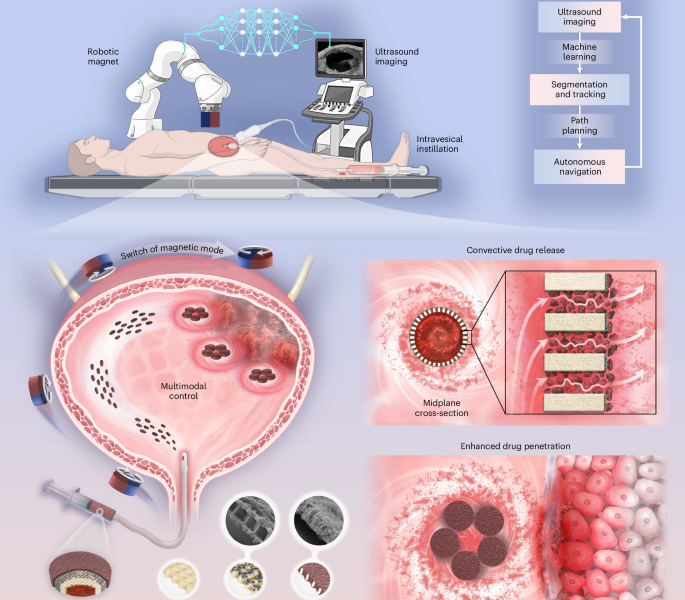
Using a deep learning-guided image-feedback system, the AI-powered microrobots were able to navigate and release intravesical drugs in real-time, enhancing tissue penetration and therapeutic efficacy in a murine bladder tumor model.
How It Works
The MIMA system combines machine intelligence with multimodal sensing and actuation to enable precise control over microrobots that are designed to deliver chemotherapy directly to cancer cells. The AI algorithm analyzes real-time images of the bladder and surrounding tissue, adjusting the microrobots’ trajectory and drug release schedule to maximize therapeutic impact.
Key Advantages
Compared to traditional chemotherapy methods, the MIMA system offers several key advantages, including:
- Improved treatment specificity: by targeting cancer cells directly, the MIMA system minimizes harm to surrounding healthy tissue.
- Enhanced efficacy: the AI-guided microrobots optimize drug release and delivery, leading to improved therapeutic outcomes.
- Non-invasive treatment: the MIMA system eliminates the need for invasive surgical procedures, reducing patient discomfort and risk.
- Real-time monitoring: the AI algorithm continuously monitors treatment progress, allowing for rapid adjustments as needed.
What This Means
The development of the MIMA system marks a significant step forward in the fight against bladder cancer. By harnessing the power of AI and multimodal sensing, researchers have created a precise and non-invasive treatment approach that offers improved therapeutic outcomes and reduced patient risk. As the MIMA system continues to evolve, it may pave the way for the development of more advanced AI-powered cancer treatments.
The success of this study underscores the potential for AI to revolutionize cancer treatment, and we can expect to see more innovative applications of machine intelligence in the medical field in the years to come.