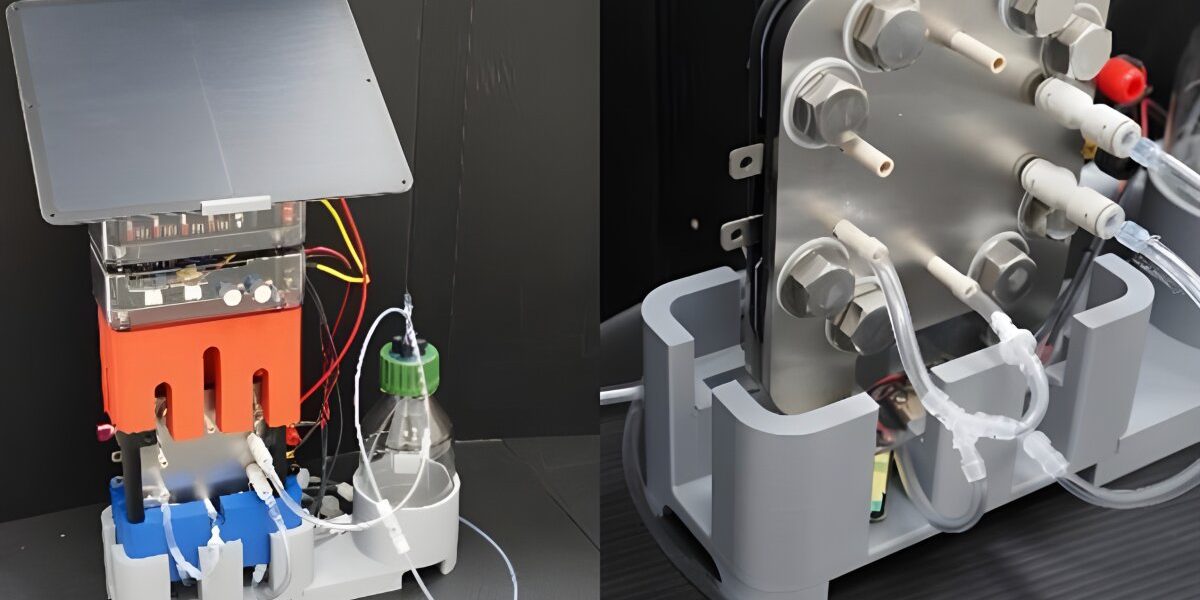
Scientists at Osaka Metropolitan University have cracked the code to creating an artificial photosynthesis system that produces ‘solar-fuel’ even in low light conditions. This breakthrough has major implications for renewable energy and the quest to replicate nature’s own energy-harvesting prowess.
Artificial Leaves Get a Boost
Unlike conventional solar systems, which are hampered by the sun’s fluctuations and require backup systems to even them out, leaves can harness solar energy even in low-light conditions. Taking a step toward that leaf-like performance, researchers at Osaka Metropolitan University have developed an artificial photosynthesis system that uses a combination of semiconductors and bacteria to mimic the process of photosynthesis.
The system’s core component is a semiconducting material called copper sulfide, which has been shown to be highly efficient at absorbing and converting sunlight into chemical energy. The researchers have also engineered a new strain of bacteria that can feed on the chemical byproducts of the photosynthesis process, producing even more fuel.
The Low-Light Advantage
One of the key advantages of this artificial photosynthesis system is its ability to function in low-light conditions. This is a major challenge for traditional solar panels, which can be severely impacted by cloud cover or nighttime operation. The researchers believe that their system could be used to power everything from small devices to entire buildings, providing a reliable and sustainable source of energy.
According to the researchers, the system is still in its early stages and needs to be scaled up and optimized for real-world applications. However, they are optimistic about its potential and believe that it could be a game-changer for the world’s energy landscape.
What this means
The implications of this breakthrough are significant, and could have a major impact on the way we generate and use energy in the future. For one, it could provide a reliable source of power for remote or off-grid communities, reducing their reliance on diesel generators and other polluting technologies. It also has the potential to help mitigate climate change by reducing our reliance on fossil fuels and promoting the use of renewable energy sources.
While there’s still much work to be done to bring this technology to market, the researchers at Osaka Metropolitan University have made a significant step forward in unlocking the secrets of artificial photosynthesis. As they continue to refine and improve their system, we can expect to see some exciting developments in the world of renewable energy.