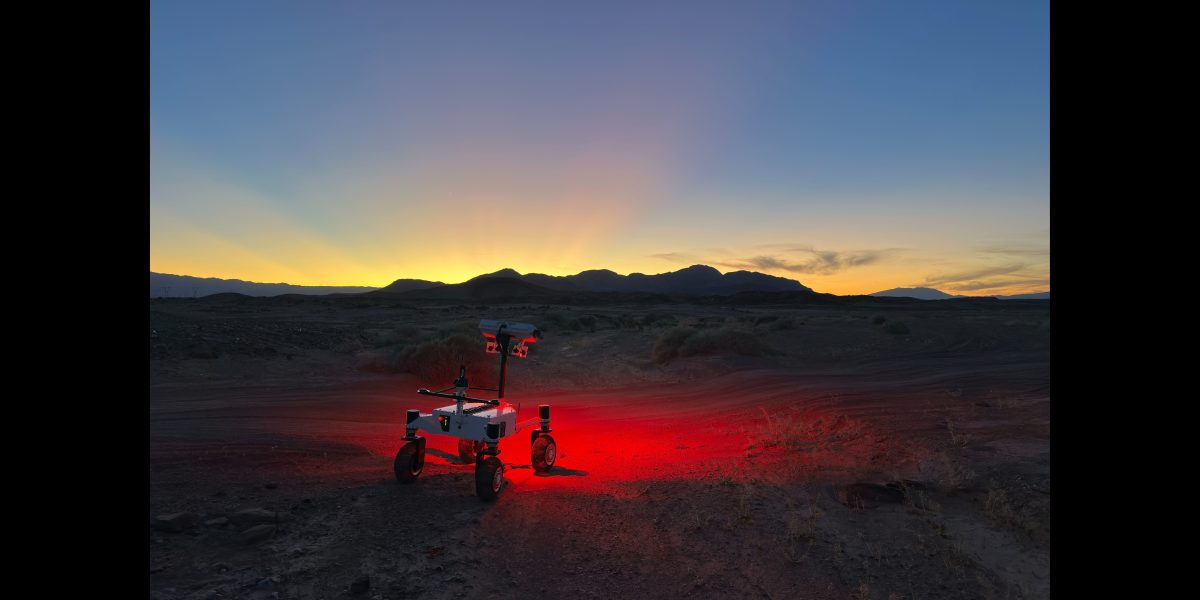
NASA engineers have been pushing the limits of remote control with their ERNEST rover, which recently traveled 16 miles across the Colorado Desert with minimal human oversight.
Advanced AI Navigation
The ERNEST (Exploration Rover for Navigating Extreme Terrain) rover is designed to test advanced AI capabilities for future lunar and Mars rovers. Equipped with a sophisticated navigation system, ERNEST can adapt to challenging terrain and make decisions on its own to avoid obstacles. This technology will be crucial for future robotic missions, where real-time human control may not be feasible due to distance and communication latency.
During the test, ERNEST’s AI system successfully processed data from on-board sensors, including GPS, cameras, and lidar, to create a 3D map of its surroundings. This allowed it to identify and avoid potential hazards, such as rocky outcroppings and sandy dunes.
Autonomous Exploration
The ERNEST rover’s autonomous exploration capabilities are a major step forward for NASA’s robotic exploration plans. Future Mars missions, for example, may require rovers to traverse vast distances without direct human control. By testing and refining these AI systems, NASA can ensure that their rovers are capable of navigating complex terrain and making decisions in real-time.
“This technology has the potential to significantly expand our robotic exploration capabilities,” said Dr. Sarah Norman, lead engineer on the ERNEST project. “We’re not just talking about sending a rover to Mars – we’re thinking about creating a robotic presence that can explore and learn on its own.”
What this means
The success of the ERNEST rover’s AI navigation system has significant implications for future space exploration. With the ability to adapt to challenging terrain and make decisions on its own, autonomous rovers like ERNEST can open up new possibilities for scientific discovery and exploration. As NASA continues to push the boundaries of AI in space exploration, we can expect to see even more advanced robotic systems in the years to come.