**Mouse Models Shed Light on Autism Brain Development**
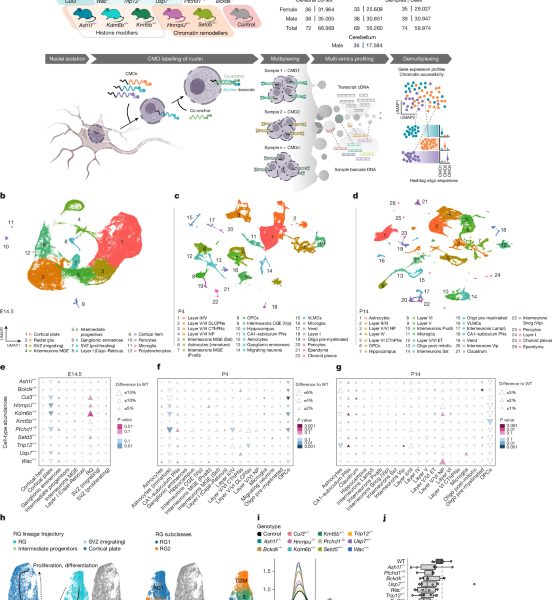
Researchers at the Institute of Science and Technology Austria (ISTA) have made a significant breakthrough in understanding how autism spectrum disorder (ASD) develops in the brain. Using advanced single-nucleus multi-omic sequencing, they analyzed gene mutations linked to ASD in mouse models and found a surprising pattern: diverse mutations converge on disrupting early brain development at specific stages.
The study involved a comprehensive analysis of brain tissue from mouse models with different ASD-linked gene mutations. By examining individual cells within the brain, the researchers were able to identify changes in gene expression that occurred at specific stages of brain development.
Transient Disruptions in Early Brain Development
The results show that ASD-linked gene mutations don’t cause continuous disruptions in brain development, but rather transient, stage-specific problems. This is a crucial finding, as it suggests that early interventions might be more effective if targeted at specific stages of brain development.
Sex-Specific Gene Expression Alterations
A striking aspect of the study is the discovery of sex-specific gene expression alterations in the mouse models. While both male and female mice showed disruptions in brain development, the specific genes affected differed between the sexes.
This finding has significant implications for understanding the complexities of ASD, which is known to affect males and females differently. It also raises questions about the potential for sex-specific treatments or interventions.
**What this means**: The study suggests that early interventions in ASD might be more effective if targeted at specific stages of brain development. Additionally, the discovery of sex-specific gene expression alterations highlights the need for further research into how ASD affects males and females differently. This knowledge could pave the way for more personalized and effective treatments for individuals with ASD.