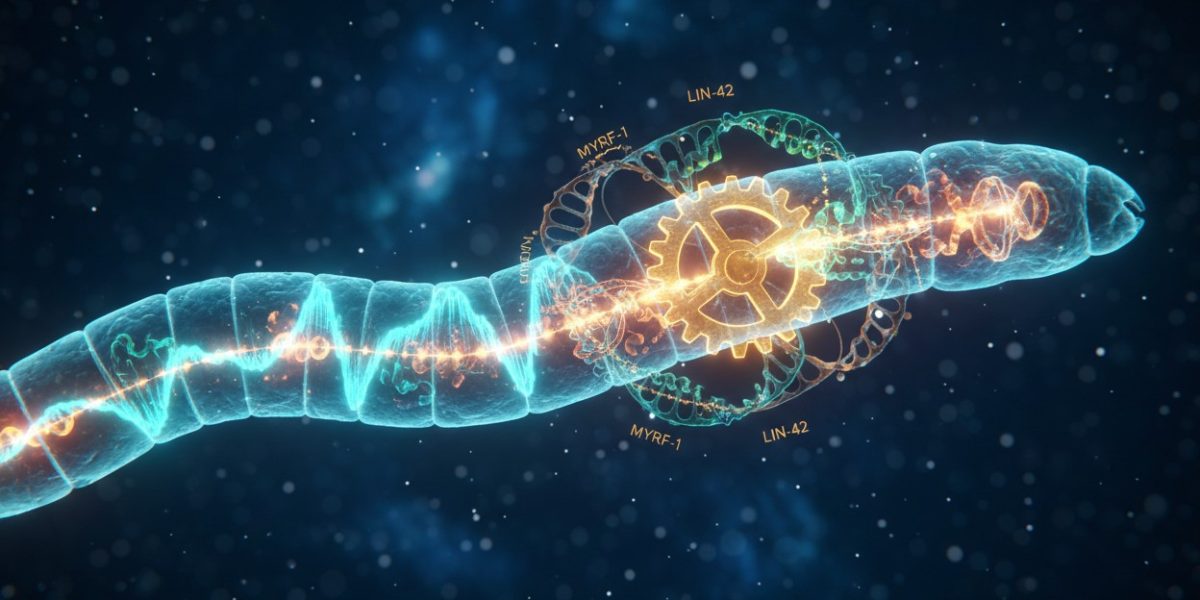
Genetic Master Clock Uncovered in Simple Organism
Scientists have long searched for the internal biological clock that orchestrates growth and development in living organisms. Now, researchers at Cold Spring Harbor Laboratory (CSHL) have finally identified this elusive “master clock” in the humble roundworm Caenorhabditis elegans.
The team, led by Dr. Chris Doe, discovered that a specific set of genes acts as a genetic clock to coordinate the timing of gene expression pulses during development in C. elegans. This intricate process is crucial for the worm’s growth, from embryonic development to adulthood. The researchers found that these genes regulate the periodic expression of other genes, essentially creating a rhythmic pattern that drives the worm’s development.
During embryonic development, the worm undergoes a series of cell divisions, and this process requires a precise timing of gene expression. The identified genetic clock ensures that the genes responsible for cell growth, differentiation, and other essential processes are expressed in a coordinated manner. Similarly, in adult worms, this clock regulates the timing of gene expression for various physiological processes, such as feeding and reproduction.
What This Means for Biology and Beyond
The identification of this genetic clock has significant implications for our understanding of developmental biology and beyond. Firstly, this discovery could shed light on the mechanisms underlying developmental disorders and diseases in humans, such as birth defects and cancer. By understanding how genetic clocks regulate development, researchers may be able to develop new treatments or therapies.
Secondly, this study highlights the importance of understanding the intricate mechanisms that govern biological processes. The genetic clock identified in C. elegans is likely to be conserved in other organisms, including humans, which means that this discovery could have broader implications for our understanding of the biology of complex organisms.
Future Research Directions
The next step for researchers will be to investigate the genetic clock in more complex organisms, including humans. This will involve identifying the equivalent genes and mechanisms that regulate gene expression in these organisms. Understanding how genetic clocks function across different species will be essential for developing new therapies and treatments for developmental disorders.
Ultimately, the discovery of the genetic master clock in C. elegans marks a significant milestone in our understanding of the biological processes that underlie growth and development. As researchers continue to unravel the intricacies of this genetic clock, we can expect to gain a deeper appreciation for the complex mechanisms that govern life itself.