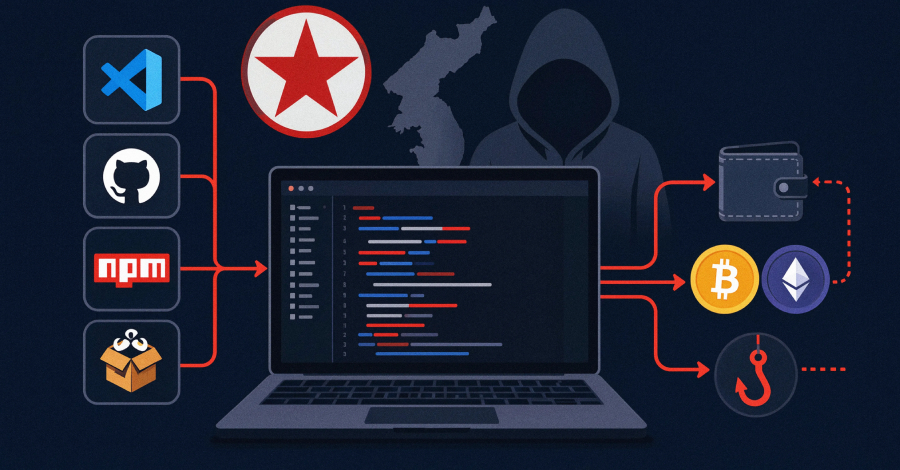
A North Korean hacking group has been caught hijacking developer tools to spread malware, highlighting a disturbing trend in cybercrime.
Malicious Intent
Cybersecurity researchers have flagged two malicious cyber campaigns that exhibit similarities with a persistent North Korean threat cluster known as Contagious Interview (aka Famous Chollima, HexagonalRodent, and Void Dokkaebi).
Contagious Interview, a well-documented threat cluster, has been linked to the North Korean government, with reported connections to the Reconnaissance General Bureau, a primary intelligence agency. The campaigns appear to be using widely used developer tools like Jenkins, a popular Continuous Integration/Continuous Deployment (CI/CD) server, and npm (Node Package Manager), a package manager for JavaScript.
Stealing Developer Tools
The hackers are compromising these tools by exploiting vulnerabilities or using stolen credentials to gain access. Once inside, they’re then using these tools as distribution channels for malware. This tactic is insidious because it leverages the trust and legitimacy that developers and organizations have in these tools.
The researchers found evidence of malicious code being spread via Jenkins and npm, which allows hackers to distribute malware across networks without arousing suspicion. This is particularly concerning because these tools are often used to deploy and manage critical infrastructure, making them high-value targets.
What this means
This development highlights the risks associated with using open-source developer tools. It’s essential for organizations and developers to be vigilant and keep their tools up to date, as even minor vulnerabilities can be exploited by sophisticated hackers.
By hijacking developer tools, Contagious Interview has successfully sidestepped traditional cybersecurity measures, further underscoring the need for a more proactive approach to threat detection and mitigation.
Avoid using stolen or compromised credentials, and ensure all tools are updated with the latest security patches. This will help prevent similar attacks in the future and minimize the risk of malware distribution through trusted channels.