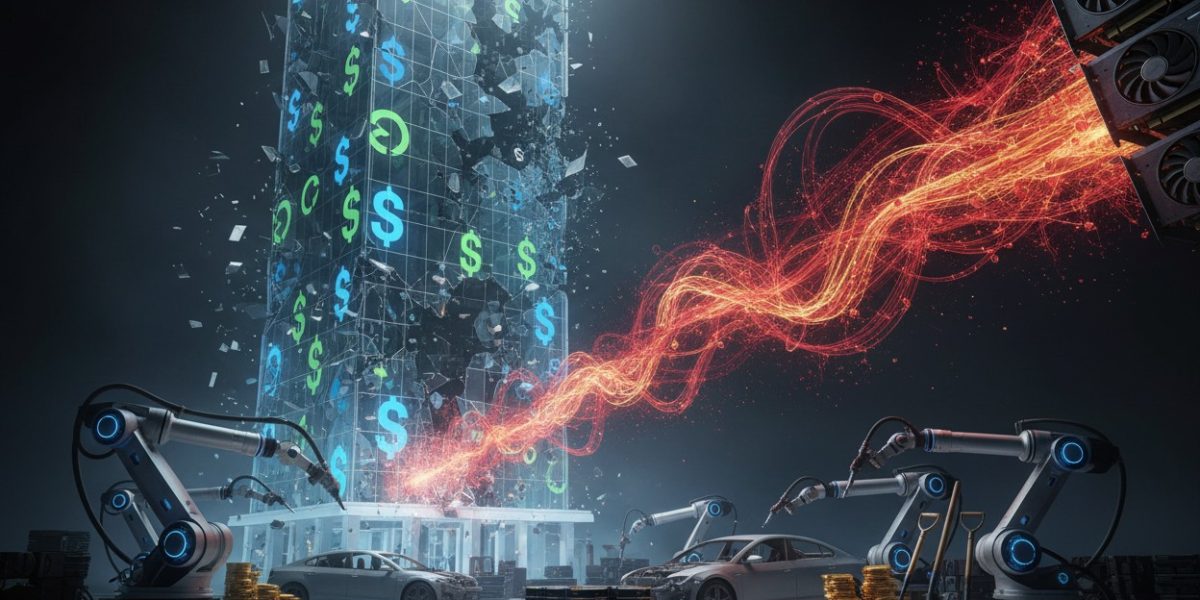
AI Data Centers are Draining America’s Water and Power
The US is facing a hidden crisis: a massive surge in energy consumption from AI data centers that’s threatening to drain the country’s water and power resources.
According to the Edison Electric Institute (EEI), data centers are projected to require up to 300 GW of power by 2030 – a staggering figure that’s more than twice the current electricity consumption of the entire state of New York.
Utility Companies Playing Fast and Loose with Numbers
But there’s a catch: Schneider Electric’s estimates vary wildly, ranging from 16.5 to 65.3 GW. This gaping discrepancy has exposed deep uncertainty among utility companies, which are using inflated projections to justify rate hikes that could further strain households and businesses.
The lack of transparency and precision has left experts scratching their heads, wondering how these figures are being used to justify rate hikes. “It’s concerning that there’s so much variation in estimates,” says **Rachel Konrad**, a spokesperson for the EEI. “This lack of consistency makes it difficult for policymakers and investors to make informed decisions.”
The Human Cost of Data Center Power Consumption
The consequences of this energy surge will be felt across the country. **Dr. Daniel Kammen**, a climate scientist at the University of California, Berkeley, warns that the increased demand for power could lead to water shortages, especially in areas where data centers are concentrated. “Water is already a scarce resource in many regions,” he notes. “The strain from data centers could exacerbate these shortages, with devastating consequences for both the environment and local communities.”
What this Means
The AI data center boom is a double-edged sword. On the one hand, it’s driving innovation and economic growth. On the other hand, it’s straining America’s resources and threatening the very foundations of our power grid. As the demand for data center power continues to grow, it’s essential that utility companies, policymakers, and industry leaders work together to develop more accurate estimates and sustainable solutions. The future of America’s energy infrastructure depends on it.