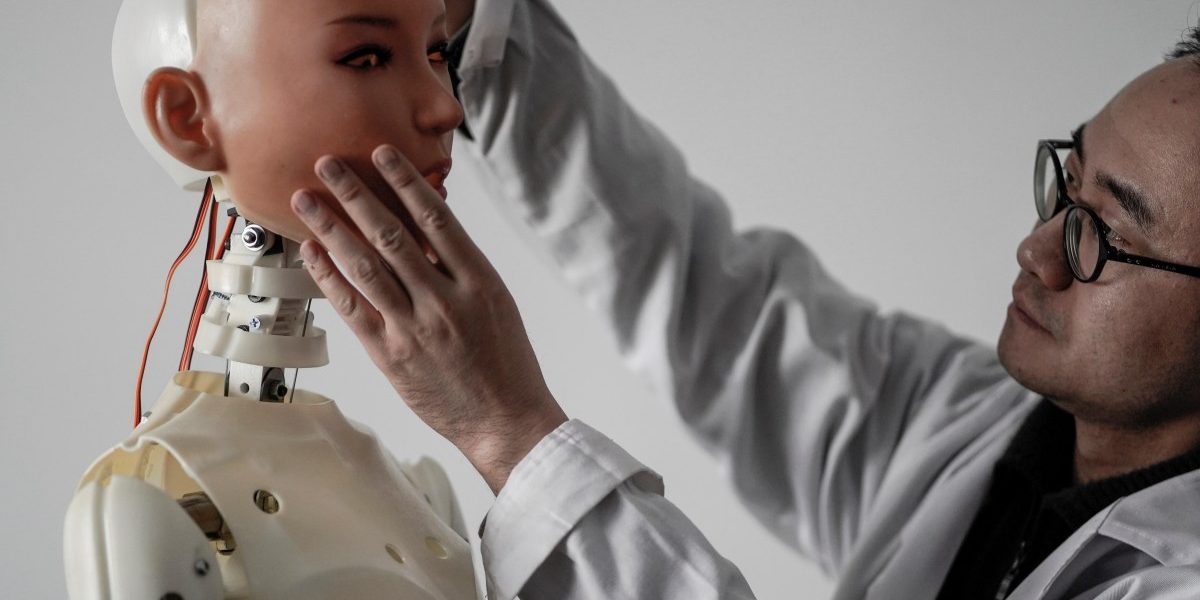
China’s Exdoll, a leading manufacturer of AI-powered humanoid robots, has just launched a line of “digital companions” designed to fill the void left by dwindling human relationships.
Fertility Rates Plummet, AI Steps In
Across the globe, fertility rates are in free fall. In 2023, the average number of births per woman worldwide slipped beneath 2.1 – the minimum threshold for sustaining population growth. This alarming trend has sparked debate about the role of technology in our increasingly isolated lives.
Exdoll’s new line of digital companions, featuring advanced AI and machine learning algorithms, promises to provide users with a sense of connection and companionship. These robots are designed to learn and adapt to individual users’ preferences, mimicking human-like conversation and interaction.
Can AI Replace Human Relationships?
Dr. Rachel Kim, an expert in human-computer interaction at Stanford University, warns that AI-powered relationships will only exacerbate our growing isolation. “We’re not just talking about sexbots here,” Dr. Kim notes. “We’re talking about a fundamental shift in how humans interact with each other.”
Exdoll’s CEO, Qin Yu, disagrees. “Our digital companions are not meant to replace human relationships, but to augment them,” he claims. “We’re simply providing people with a safe and convenient outlet for emotional connection.”
What This Means for Human Relationships
The rise of AI-powered companions raises questions about the value of human relationships in a post-digital world. As fertility rates continue to plummet, it’s clear that something is amiss in the way we’re connecting with each other.
The launch of Exdoll’s digital companions is just the beginning of a new frontier in artificial intelligence. As we become increasingly dependent on technology for our emotional needs, it’s time to ask: what does it mean to be human in a world where AI is increasingly indistinguishable from our own kind?
**The numbers:** In 2023, 1.47 billion women of childbearing age worldwide had fewer than 2.1 children on average. This marks a 15% decline from 2015.