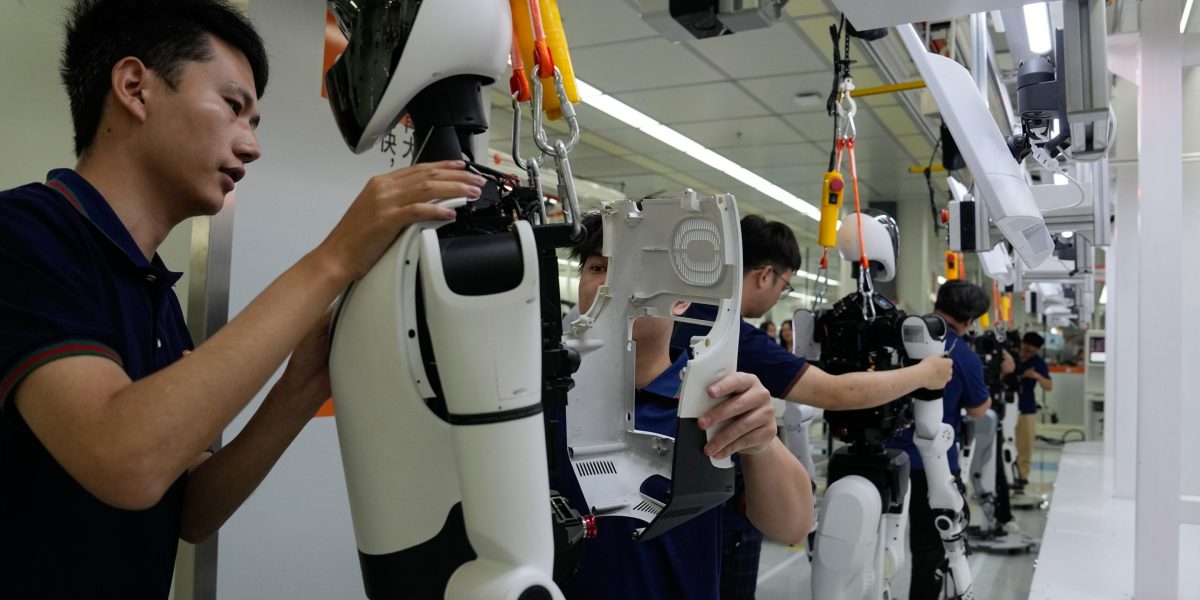
Thousands of Chinese humanoid robots are shipped every year, largely thanks to companies like RoboThespian, UBTECH, and CloudMinds. These robots have captured the world’s attention with their impressive stunts, such as backflips and pouring coffee, but there’s a catch – they’re still mostly performative rather than functional.
The Rise of Humanoid Robots
The demand for humanoid robots is fueled by China’s massive market, where they’re used in various applications like customer service, logistics, and even tourism. These robots have become a symbol of innovation and technological advancement, with some even being designed to resemble humans. The most popular humanoid robots, such as RoboThespian and UBTECH’s Atlas, are primarily used for entertainment and demonstration purposes.
Mass Production Hurdles
Despite the high number of shipments, the mass production of humanoid robots still faces significant challenges. CloudMinds, a leading Chinese robotics company, has pointed out that the lack of demand and scale in the market makes it difficult to produce these robots on a large scale. This means that most humanoid robots are still custom-built and expensive, limiting their accessibility to a wider audience.
A Functional Future?
As the technology continues to improve, there’s hope that humanoid robots will become more functional and less reliant on scripted performances. Companies like UBTECH are already working on more advanced robots that can interact with humans in a more natural way, using gestures and facial recognition. However, it’s still unclear when we can expect to see these robots in our daily lives, performing tasks that are truly practical and meaningful.
What this means is that we’re still waiting for the day when humanoid robots will transcend their current role as entertainment devices and become truly useful tools in our homes, workplaces, and communities. Until then, we’ll continue to be fascinated by their performances, but also a bit skeptical about their potential to truly make a difference.