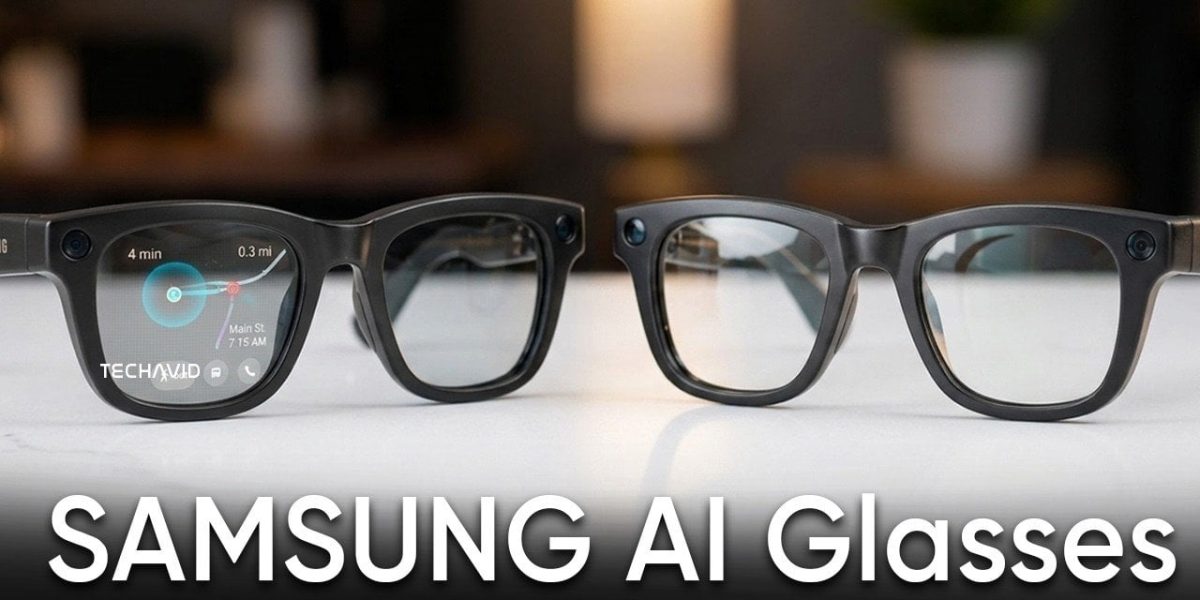
Samsung unveiled its first AI glasses, codenamed “Jinju,” during the Q1 2026 earnings call, marking a significant step towards integrating artificial intelligence into everyday wearables.
What’s Inside?
The Jinju model has some intriguing features, including photochromic lenses that automatically adjust to changing light conditions.
While that may sound familiar, these lenses are only the beginning – Samsung has opted not to include a display in this initial model.
No Display, No Problem?
The decision to forego a display is an intentional design choice by Samsung, focusing on the glasses’ ability to subtly enhance the wearer’s daily life through AI-powered features.
According to sources, the primary goal of Jinju is to seamlessly integrate AI capabilities into the user’s environment, rather than trying to replicate the functionality of a smartphone on their face.
This suggests that the Jinju glasses are designed to work in conjunction with other devices, like smartphones, rather than becoming an all-in-one solution in itself.
What this means
Samsung’s AI glasses represent a new direction in wearable tech – one that values practicality and integration over sheer functionality.
By forgoing a display, the Jinju model highlights the potential benefits of AI-enhanced wearables, which can provide subtle, context-aware assistance without overwhelming the wearer with information.
This approach could signal a shift towards more streamlined, human-centered design in the wearable tech space – one that prioritizes ease of use and seamless integration with other devices.