Scientists Unveil a Revolutionary Molecular Motor, Powered by Light
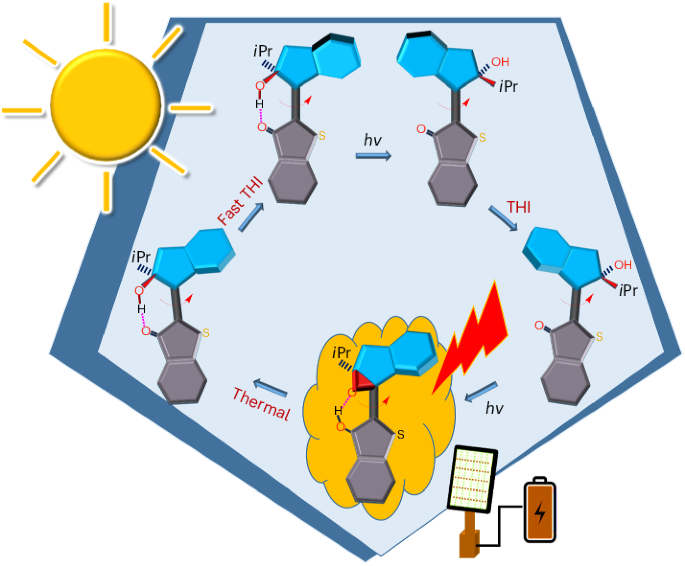
A team of researchers led by Ben L. Feringa, a renowned chemist, has made a groundbreaking discovery in the field of molecular machines. They’ve developed a supercharged molecular motor that operates by constitutional alteration and proton transfer, a mechanism previously unseen in this area of research.
The existing varieties of molecular motors work by harnessing energy from light-induced bond rotations, but the new device, described in a recent study published in Chemical Reviews, takes a different approach. Constitutional alteration refers to changes in the molecular structure, while reversible proton transfer involves the movement of protons (hydrogen ions) within the molecule. This innovative mechanism enables the motor to perform a coupled motion, a fundamental aspect of machine-like function.
Mechanism and Application
The researchers used a combination of experimental and theoretical techniques to engineer the molecular motor. By carefully controlling the light-induced reactions, they were able to manipulate the molecular structure and facilitate proton transfer, resulting in the coupled motion. This breakthrough has significant implications for the development of molecular machines that can perform complex tasks, such as transportation and manipulation of molecules at the nanoscale.
While the immediate applications of this research may seem far-fetched, the underlying principles and technologies can lead to innovations in fields like materials science, chemistry, and even medicine. The ability to control molecular motion and structure could pave the way for the creation of advanced materials with unique properties, or even enable the design of novel therapeutic agents.
What This Means
The discovery of this molecular motor represents a significant milestone in the pursuit of machine-like function at the molecular level. While it may not have immediate practical applications, it marks an important step towards the development of more complex molecular machines. As researchers continue to explore the possibilities of this new mechanism, we may see the emergence of innovative technologies that harness the power of molecular motion to drive progress in various fields.