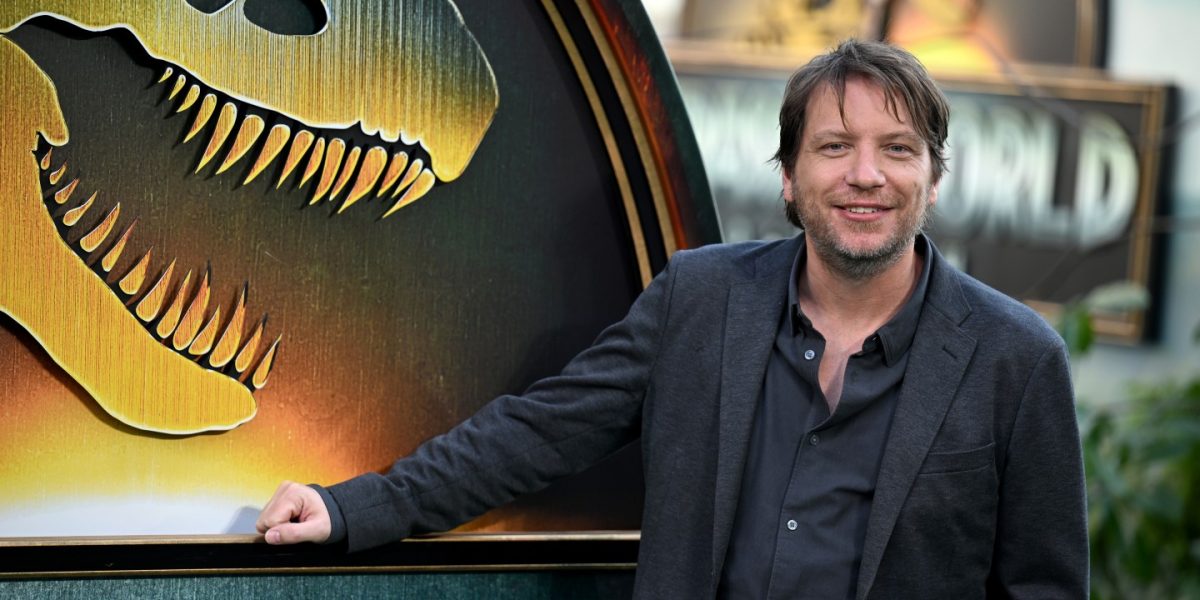
Gareth Edwards is the latest A-list director to publicly express enthusiasm for AI filmmaking.
Diffusion Models Get the Hollywood Treatment
The helmer of Jurassic World Rebirth and Rogue One has been experimenting with diffusion models – a type of generative AI that can create realistic images and videos from text prompts – and is already thinking about how to integrate this tech into his filmmaking process.
“I’ve been playing around with some of these AI tools, like diffusion models, and I think they’re really exciting,” Edwards told The Hollywood Reporter. “I’d love to use them to create a hybrid film someday, where the AI generates some of the footage and I do the rest.”
This isn’t just wishful thinking; Edwards has actually been working on a short film using these AI tools. He’s reportedly been using the AI to generate backgrounds, characters, and even entire scenes, and then editing them into a cohesive narrative.
The Future of Hybrid Filmmaking
Edwards isn’t the only one in Hollywood exploring AI filmmaking. Other directors like Neill Blomkamp and Ryan Coogler have also experimented with generative AI, and studios are starting to take notice.
The possibilities for AI-assisted filmmaking are endless. Generative AI could be used to create realistic special effects, or to generate entire sets and locations in a fraction of the time it would take traditional methods. It could also help filmmakers overcome budget constraints or logistical challenges.
Of course, there are also plenty of potential downsides to consider. For one thing, relying too heavily on AI could lead to a homogenization of film styles and a loss of human touch. There’s also the very real risk of AI-generated content being used in ways that are misleading or deceptive.
What This Means
Gareth Edwards’s enthusiasm for AI filmmaking is worth paying attention to. If A-list directors are experimenting with this tech, it’s likely we’ll see more of it in the movies soon. Whether you’re a filmmaker or just a movie fan, the implications of AI-assisted filmmaking are worth keeping an eye on.
Edwards’s hybrid AI film may be a long way off, but it’s clear that he’s already thinking about how to blend human creativity with machine-generated content. As the boundaries between humans and machines continue to blur, one thing is certain: the future of filmmaking will be shaped by the intersection of art and technology.