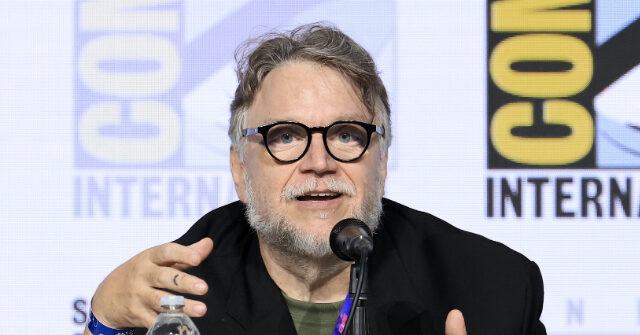
Academy Award-winning director Guillermo Del Toro sparked a standing ovation at San Diego Comic Con when he delivered a scathing rejection of generative AI.
Anti-AI Sentiment Grows in Hollywood
Del Toro, known for his visually stunning and often darker films like Pan’s Labyrinth and Hellboy, has been a vocal critic of generative AI in the past. At this week’s Comic Con, he reinforced his stance, telling the crowd, "Absolutely no g**damn AI." The crowd’s enthusiastic response was a testament to growing unease in the film industry about the role of AI in content creation.
Del Toro’s comments come at a time when the boundaries between human and artificial creators are increasingly blurred. Generative AI algorithms can now produce convincing visual effects, music, and even entire scripts. While some see this as a game-changer for the industry, others like Del Toro are concerned that AI-generated content risks eroding the value and uniqueness of human creativity.
Human Touch in Cinema
Del Toro’s passion project, the upcoming Pinocchio film, has been touted as a visually stunning and emotionally charged reimagining of the classic tale. When asked about the influence of AI on his work, Del Toro emphasized the importance of human touch and emotional depth in cinema. He believes that AI-generated content lacks the nuance and emotional resonance that human storytellers can bring to a project.
Some critics have accused Del Toro of being out of touch with the future of the industry, but his views are resonating with many in the film community. With AI-generated content on the rise, the question of what it means to be a creator in the 21st century is becoming increasingly relevant.
What this means
In practical terms, Del Toro’s rejection of AI-generated content signals a desire for authenticity and uniqueness in storytelling. As AI continues to shape the creative industries, consumers and creators will need to navigate the implications of this new landscape. Will the value of human creativity be diminished by AI-generated content, or will it spark new innovations and collaborations between humans and machines?