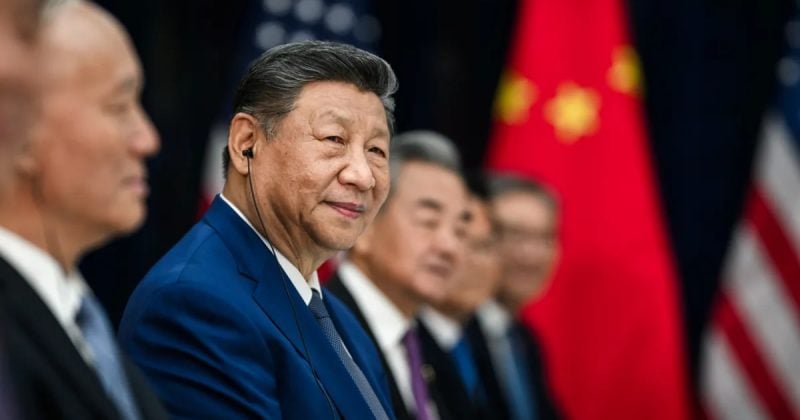
Xi Jinping, China’s president, has given a strong endorsement to his country’s AI breakthroughs, highlighting their low-cost nature and pushing for an open tech order at the 2026 World Artificial Intelligence Conference in Shanghai.
A Challenge to Western Tech Dominance
At the conference, Xi called for an open tech order, a concept that implies Chinese AI models and technologies should be accessible to the global community, effectively challenging Western tech dominance. This move comes as China continues to invest heavily in AI, with an estimated $150 billion allocated to AI development in the past five years.
Low-Cost AI Breakthroughs
Xi praised China’s AI advancements, specifically highlighting the development of low-cost models that can be easily integrated into various industries. Chinese AI companies, such as DeepMind’s rival, Yunzi, have successfully created AI models that can perform tasks as complex as language translation and medical diagnosis at a lower cost than existing Western models.
While the Chinese government has not explicitly stated that these AI breakthroughs are intended to challenge Western tech leaders, it’s clear that China’s AI ambitions are closely tied to its economic goals. By promoting low-cost AI models, China is positioning itself as a more affordable alternative to Western tech options, which could potentially disrupt the global tech landscape.
Open Tech Order: Implications for Global Tech
The concept of an open tech order has significant implications for the global tech community. If China successfully implements an open tech order, it could mean that Western tech companies will be forced to adapt to new competition and share their own AI models with the global community.
What this means for consumers is that they may soon have access to a wider range of AI-powered services and technologies, potentially at a lower cost. However, it also raises questions about data ownership and security, as well as the potential for AI-powered services to be more widely available but also more vulnerable to cyber threats.