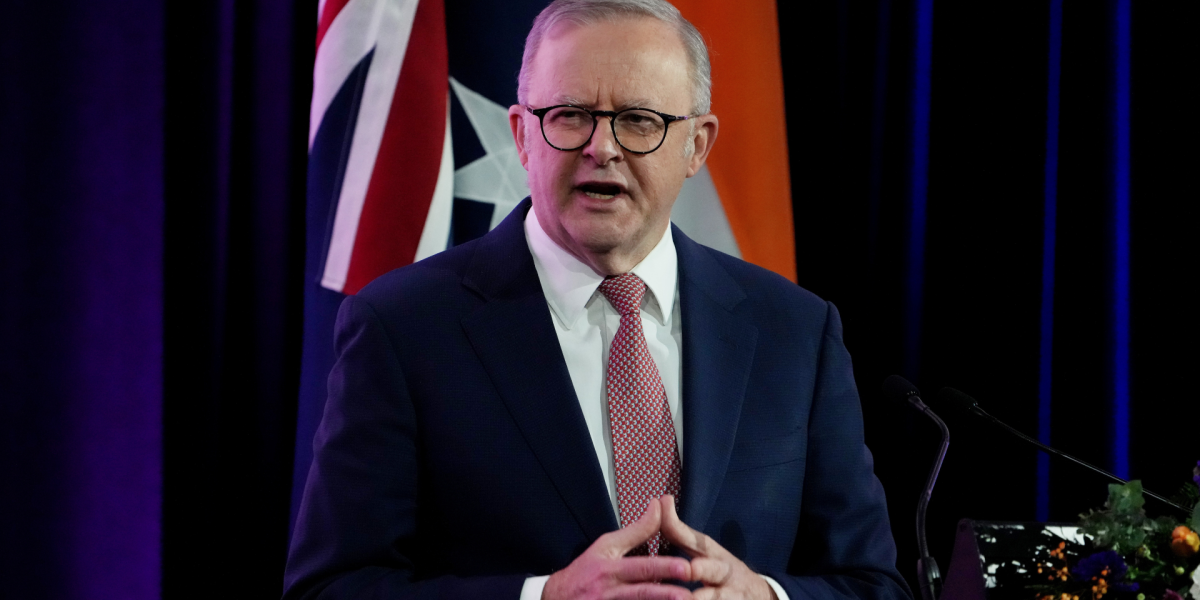
Australia’s Prime Minister Anthony Albanese has sent a clear message to the tech industry: building AI data centers that guzzle energy won’t be tolerated anymore. In a move to set a global precedent, he’s committed to making these facilities carbon-neutral.
New National Framework in the Works
Australian Prime Minister Anthony Albanese announced the “Australian Standards for A.I.,” a set of guidelines aimed at governing data center developments for the rapidly growing AI industry. This framework will not only ensure that these facilities use clean energy but also prioritize water efficiency and protect intellectual property rights.
The Australian government plans to create a legislation to enforce these standards as more AI hyperscalers set up shop in the country. With major players like Amazon, Google, and Microsoft already investing heavily in Australian infrastructure, this framework is a significant step towards establishing a global industry standard.
Zero-Carbon Footprint Required
Prime Minister Albanese emphasized that AI data centers will need to produce as much clean energy as they consume. This means that they’ll have to invest in on-site renewable energy sources, such as solar panels or wind turbines, to offset their power usage. The goal is to make AI development not only sustainable but also a net-positive force for the environment.
This move is a bold response to the massive energy demands of AI data centers. According to estimates, a single AI data center can consume as much energy as a small town. By requiring these facilities to produce their own energy, the Australian government is sending a clear message to the industry: it’s time to get serious about sustainability.
Water Efficiency and IP Protection
The new framework will also address water efficiency and intellectual property rights. With AI data centers often requiring large amounts of water for cooling, the government is pushing for more efficient cooling systems that minimize water waste. Additionally, the framework will establish clear guidelines for protecting IP rights, ensuring that AI innovations developed in Australia are safeguarded from unauthorized use.
What this means for the industry is that AI companies operating in Australia will need to adapt to these new standards. This may involve significant investments in clean energy, more efficient cooling systems, and robust IP protection mechanisms. While this may present challenges, it also presents opportunities for companies to innovate and stay ahead in the rapidly evolving AI landscape.