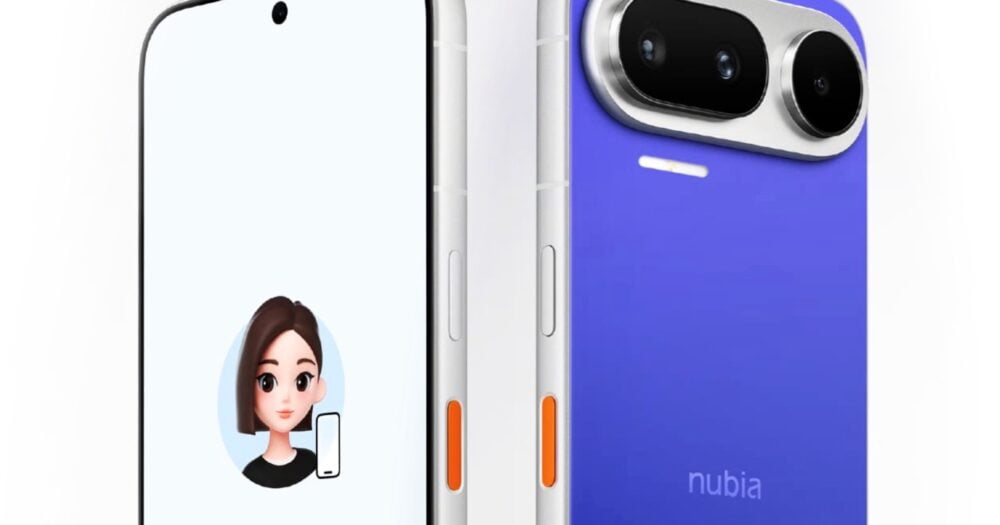

ZTE has officially announced the Nubia NaviX Ultra, a smartphone it claims is the world’s first AI agent device, which means it could revolutionize the way we interact with our phones.

Traditional smartphones rely on apps to provide services and functionality, but the Nubia NaviX Ultra takes a different approach by putting AI agents at the forefront. These AI agents can perform various tasks, handle queries, and even offer personalized recommendations.
By integrating AI agents into the phone’s core, ZTE aims to create an intuitive and user-friendly experience that eliminates the need for traditional apps. This approach could potentially simplify the way we use our phones, making it easier to access necessary services and features.
Theoretical benefits and concerns
The concept of an AI agent smartphone is intriguing, but it raises several questions. For instance, how will these AI agents be designed and integrated? What kind of data will they require to function effectively? And what about security and data protection?
According to ZTE, the Nubia NaviX Ultra will rely on a sophisticated AI framework that allows multiple agents to coexist and collaborate seamlessly. The company claims that these agents will be trained using massive datasets and machine learning algorithms to ensure their accuracy and effectiveness.
What this means for users
While the Nubia NaviX Ultra’s potential is exciting, it’s essential to separate hype from reality. For now, we don’t have concrete details on how the phone will work or what kind of AI agents it will feature. However, if ZTE successfully executes its vision, it could lead to a fundamental shift in how we interact with our smartphones, making them more seamless and user-centric.
For now, it’s a wait-and-see situation, but one thing is certain: the Nubia NaviX Ultra’s concept has the potential to disrupt the smartphone industry and push the boundaries of what’s possible with AI and mobile technology.