A Brain-Computer Interface Just Bypassed Damaged Hearing, Restoring Speech for the Deaf.
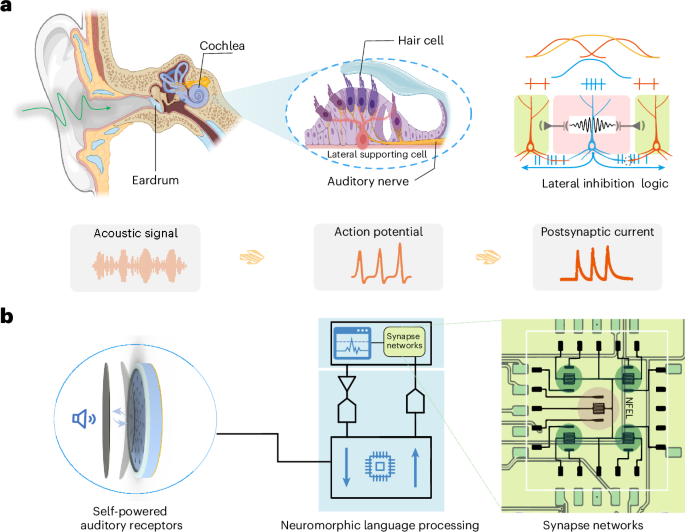
Researchers have made a significant breakthrough in treating hearing loss by developing an artificial neuromorphic interface that can bypass damaged auditory pathways and directly stimulate the brain. This innovation allows for the restoration of speech in patients with previously untreatable hearing loss.
How Does It Work?
The artificial interface, dubbed a “neuromorphic” one, seamlessly integrates with the body’s own nerve fibers. This means it can directly interact with the brain’s neural pathways, effectively bypassing damaged tissue. By doing so, it restores the flow of sound information between the ears and the brain.
The Current State of Hearing Loss Treatment
Currently, treatments for hearing loss only cater to patients with intact auditory pathways. This means that those with severe damage to these pathways, often caused by genetic disorders, infections, or age-related issues, have limited options. The new interface offers hope for these individuals, potentially changing the quality of life for millions worldwide.
What this means: This technology could revolutionize the way we approach hearing loss. By directly bypassing damaged tissue, it may enable effective treatment for patients previously excluded from current care options.
Future Implications
The implications of this innovation go beyond hearing loss treatment. The same principles could be applied to other conditions involving damaged neural pathways, such as paralysis, stroke, or neurodegenerative diseases. Researchers are already exploring potential applications in these areas.
The development is the result of collaboration between Charles Petit, Claire Bonnet, and Safieddine in a research paper published in Nature Reviews Genetics.