Retail Traders Sour on Stocks
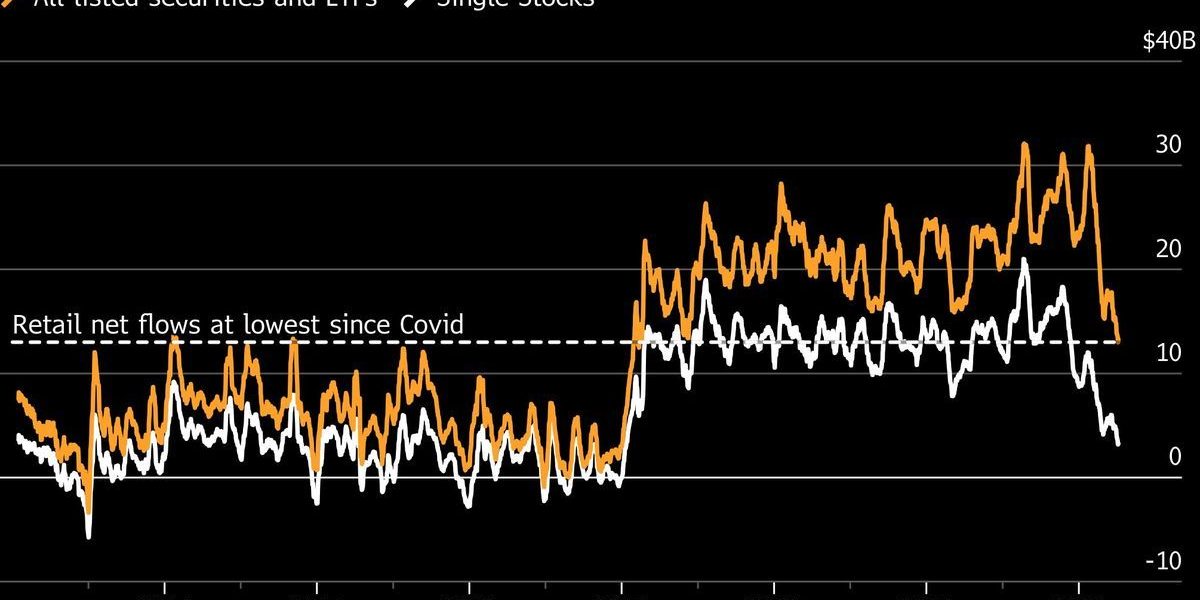
Retail traders, who’ve fueled the US stock market’s remarkable comeback this decade, are suddenly losing their mojo.
According to a recent report, they’re becoming increasingly hesitant to bet on the S&P 500, an index that’s closely tied to the overall health of the US economy. This shift is particularly striking given the index has consistently risen over the past decade, making it a favorite among retail traders.
For those unfamiliar, retail traders are individual investors who make their own buy and sell decisions, often through online platforms. They’ve been major drivers of the market’s growth, especially during the pandemic when many turned to trading as a side hustle or even a career. Some notable examples include the likes of Robinhood and eToro, platforms that made it easy for anyone to start trading.
But what’s behind this sudden waning of conviction? Some analysts point to the market’s recent volatility, with the S&P 500 experiencing several downturns in the past year. Others suggest that retail traders might be losing their enthusiasm due to a lack of clear opportunities for growth. Whatever the reason, the trend is clear: retail traders are increasingly hesitant to put their money on the line for the S&P 500.
The Shiny Object Syndrome
While retail traders are backing away from the S&P 500, they’re still eager to jump into other types of investments that offer more excitement and potential for quick gains. In recent months, there’s been a surge of interest in cryptocurrencies, meme stocks, and other speculative assets. It’s as if they’re chasing shiny objects, hoping to strike it big.
What this means
For regular investors, this trend suggests that the market might be due for a correction. If retail traders are no longer driving up demand for the S&P 500, it could mean that the market’s growth will slow or even reverse. Of course, this is all speculation, but it’s worth keeping an eye on if you’re invested in the market.