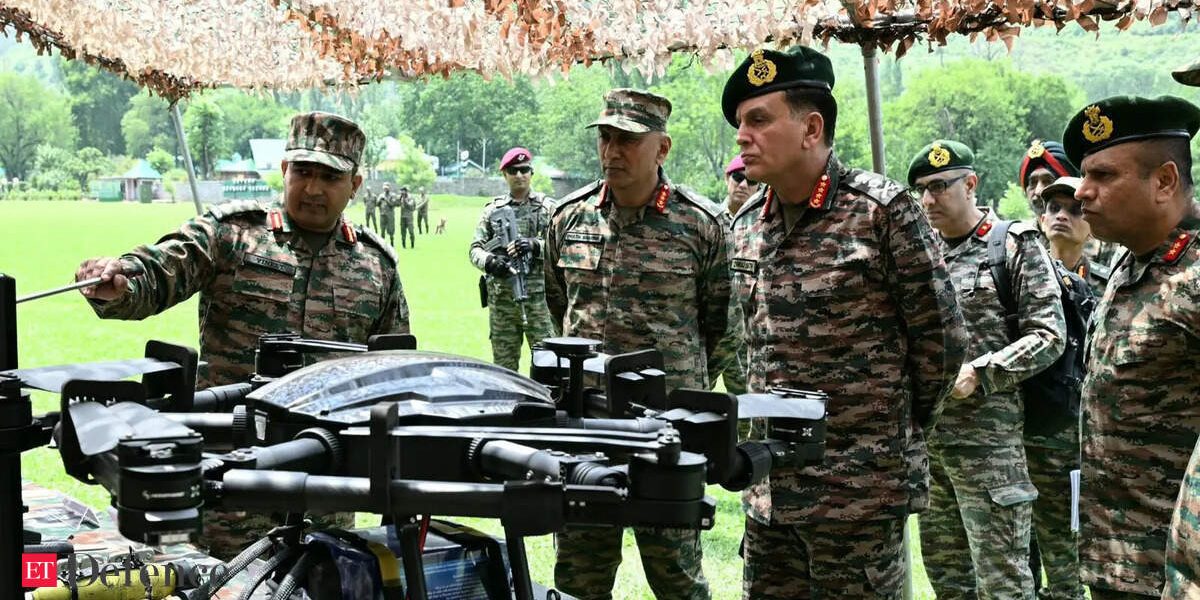
Ahead of potential conflicts, Army Chief General Dhiraj Seth has issued a stern directive to serving officers, prioritizing combat readiness for future operations against China and Pakistan.
General Seth has directed officers to prepare for Operation Sindoor 2.0 and Operation Snow Leopard 2.0, signaling an increased focus on military preparedness. The Army Chief emphasized the importance of comprehensive mission readiness, encompassing logistics and human resources.
The Role of AI in Future War
The mention of these operations raises questions about the potential role of AI in future conflicts. Artificial intelligence (AI) has already started to transform various aspects of the military, including surveillance, reconnaissance, and combat analysis. As tensions escalate with neighboring countries, it’s likely that AI will play a more prominent role in the Indian military’s operations.
AI can enhance the effectiveness of military operations by analyzing vast amounts of data, identifying patterns, and making predictions. However, its integration also raises concerns about the potential for autonomous decision-making and the risks associated with AI-powered systems.
What This Means
The Army Chief’s directive is a clear indication that the Indian military is preparing for potential conflicts in the future. In practical terms, this means that Indian soldiers and officers will receive better training in AI-powered systems, allowing them to make more informed decisions on the battlefield. Additionally, the military will likely invest more in AI research and development to stay ahead of adversaries.
In the context of Operation Sindoor 2.0 and Operation Snow Leopard 2.0, the integration of AI will likely focus on enhancing the military’s surveillance capabilities, allowing for more accurate and timely intelligence gathering. This, in turn, will enable the military to make more effective decisions and stay one step ahead of its adversaries.
The Road Ahead
The Indian military’s increasing focus on AI is a significant development that will likely have far-reaching implications for the country’s national security. As tensions with neighboring countries continue to escalate, the military’s preparedness will be crucial in maintaining the country’s safety and security.
General Seth’s directive is a clear indication that the Indian military is taking a proactive approach to national security, investing in cutting-edge technologies like AI to stay ahead of potential adversaries. The impact of this directive will be felt in the long term, shaping the future of Indian military operations and national security.