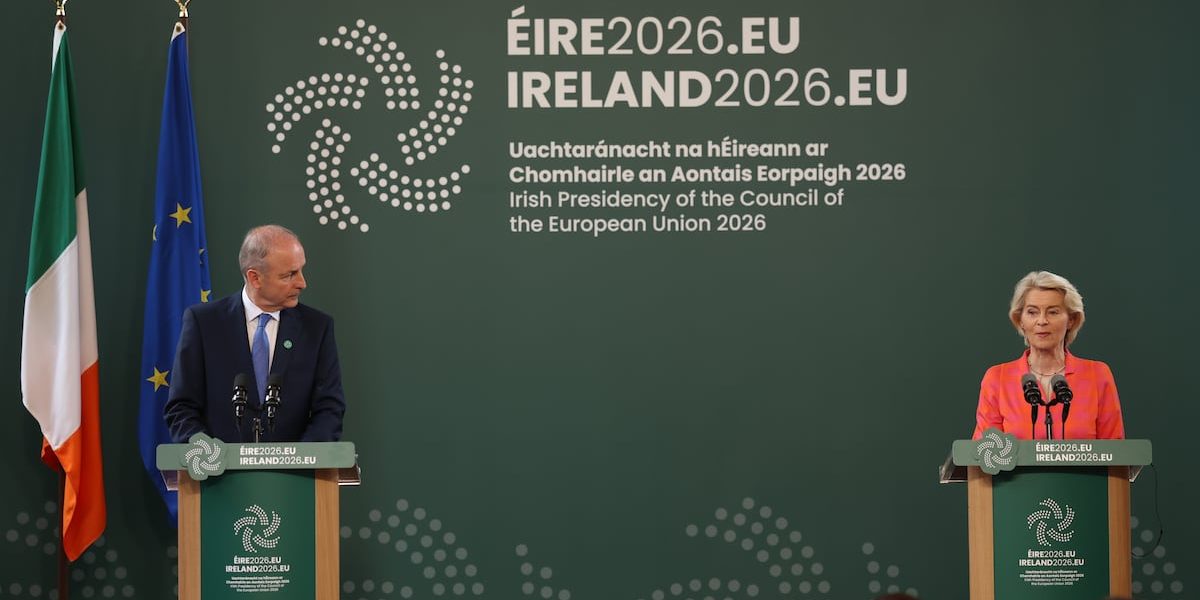
A group of academics has called for the Irish Government to step back from negotiating EU tech policy and corporate tax legislation, citing a questionable track record in these areas.
The letter, signed by researchers at University College Dublin and Trinity College Dublin among others, was addressed to the current head of the EU Council, the Irish Taoiseach, Micheál Martin.
According to the academics, the Irish Government’s influence in negotiations is problematic because of its close ties to the country’s tech industry, led by multinational corporations like Google, Apple, and Microsoft.
EU Presidency: A Conflict of Interest?
The EU’s Council of the EU presidency gives the current member state a six-month rotating stint at the helm, during which it leads negotiations on key policy decisions.
The critics argue that this setup creates a conflict of interest when it comes to digital policy and corporate tax, as the Irish Government stands to benefit financially from any agreements reached.
The academics point out that the country has been host to many tech giants and has benefited from large-scale investment in the sector, particularly in the form of tax breaks.
Concerns Over Digital Policy and Corporate Tax
The letter highlights the tension between the Irish Government’s actions and its role in shaping EU policy, particularly when it comes to digital policy and corporate tax.
EU policymakers are currently debating new legislation aimed at addressing issues like tax avoidance and data protection.
The academics warn that the Irish Government’s participation in these negotiations risks undermining the EU’s ability to create effective and fair policy.
What This Means
The academics’ call for the Irish Government to recuse itself from negotiations reflects broader concerns over the influence of special interests in EU policy-making.
The outcome of the debate could have significant implications for the future of digital policy and corporate tax in Europe.
As the EU continues to grapple with the challenges of the digital age, the need for fair and effective policymaking is more pressing than ever.