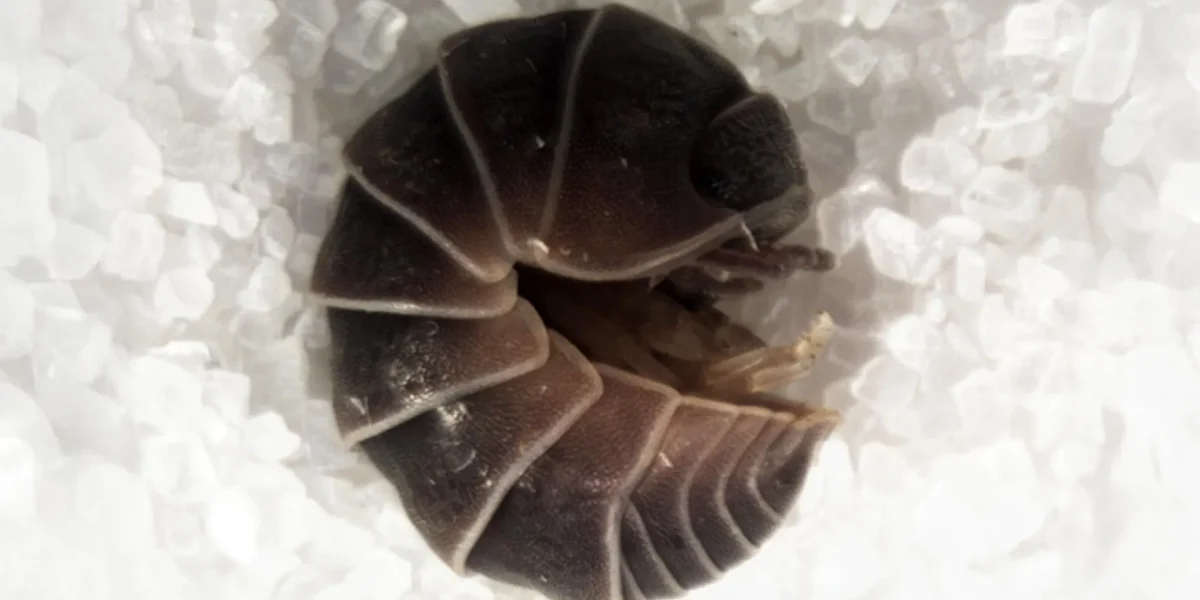

Streetlights in cities worldwide are unwittingly luring thousands of woodlice into mesmerizing circular patterns, researchers have discovered.
In a study published recently, scientists found that artificial lighting can trap the tiny creatures in synchronized “death spirals” – never before seen in the wild. These spirals, which can involve thousands of pill bugs, are thought to be triggered by the constant, pulsing light from streetlights.
The researchers observed that the woodlice, also known as pill bugs or isopods, would gather around the streetlights, drawn in by their brightness. As more and more of the creatures arrived, they formed a circular pattern, with each individual moving in sync with the others. The effect was eerie and mesmerizing, with the pill bugs appearing to move as one.
Dr. Emily Wilson, lead author of the study, explained the phenomenon: “It’s as if the light pollution is creating a kind of ‘hall of mirrors’ effect, where the pill bugs get trapped in a never-ending loop of movement.” She added that the discovery suggests that light pollution may be unintentionally altering the behavior of urban wildlife.
What this means
The study’s findings have important implications for our understanding of the impact of artificial lighting on urban ecosystems. As cities continue to grow and expand, the use of streetlights is likely to increase, potentially affecting not just woodlice but other nocturnal creatures as well.
“As urban planners and policymakers, we need to consider the consequences of our actions,” said Dr. Wilson. “We may think we’re just adding more light to make our cities safer, but we could be inadvertently disrupting the natural world.”
The impact on urban wildlife
The study’s discovery has sparked concerns about the potential impact of light pollution on urban wildlife. While the effects on pill bugs may seem minor, they could have broader implications for the ecosystem as a whole.
“We’re seeing a shift in the way urban wildlife behaves, and it’s not just limited to pill bugs,” said Dr. Wilson. “Other nocturnal creatures, like bats and birds, may also be affected by artificial lighting. We need to take a closer look at the effects of light pollution and how we can mitigate them.”
A call to action
As cities look to reduce their environmental impact, the study’s findings offer a compelling argument for rethinking the use of artificial lighting. By designing more sustainable lighting systems, we can minimize the effects of light pollution and create a more harmonious relationship between humans and urban wildlife.