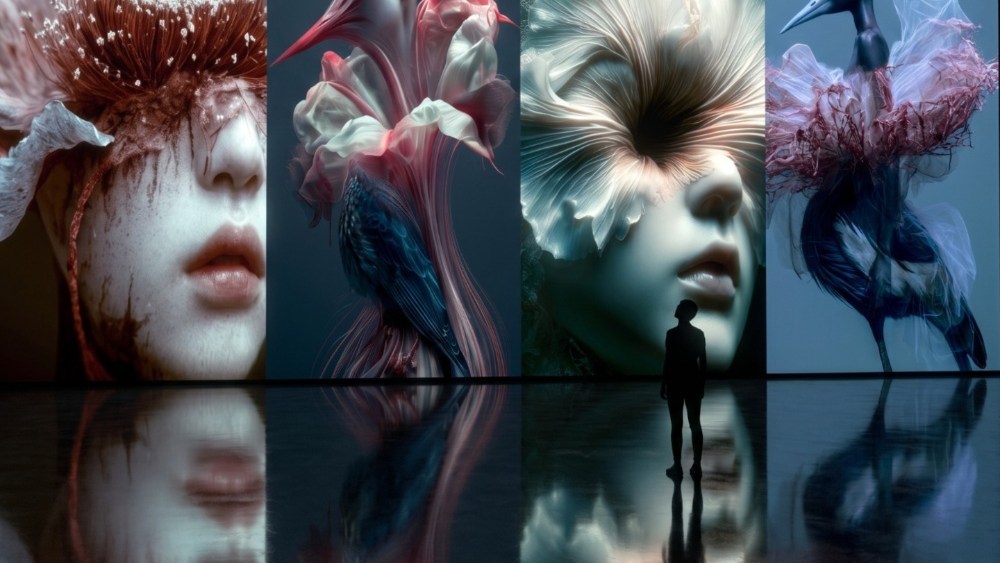
AI art has gone from digital canvases to fully immersive experiences. This month, Dutch artist Ray Tijssen unveiled “Algorithmic Organisms 2.0,” an AI-driven audiovisual exhibition in Kuala Lumpur that redefines the boundaries of interactive art.
AI-Generated Lifeforms
The show’s centrepiece is a swarm of artificial lifeforms, each born from intricate, data-driven algorithms. These ‘organisms’ pulse with vibrant colours and patterns, creating an immersive environment that reacts to the viewer’s presence. They’re like bioluminescent creatures from a sci-fi movie, alive and responding to the space around them.
“Algorithmic Organisms” uses machine learning to create a dynamic ecosystem, where each lifeform evolves over time. This adaptive quality gives the show an uncanny sense of life, blurring the line between art and nature. Tijssen’s creation asks viewers to reconsider their relationship with technology and the digital world.
Data-Driven Storytelling
Behind the mesmerizing visuals lies a complex data narrative. The show’s algorithms gather information from the environment, incorporating factors like sound, temperature, and even the movement of visitors. This process allows the lifeforms to adapt and change in real-time, creating a unique experience for each attendee.
Tijssen’s work represents a new frontier in AI-driven storytelling. By leveraging machine learning, he’s able to craft a narrative that’s both deterministic and unpredictable. This approach challenges traditional notions of authorship and control, inviting viewers to become an integral part of the artistic process.
What this means
The impact of “Algorithmic Organisms” goes beyond the realm of art. As AI-generated content becomes increasingly sophisticated, we can expect to see more immersive, data-driven experiences in various fields, from entertainment to education. This trend signals a new era of interactive storytelling, where technology and creativity converge to create experiences that are both captivating and thought-provoking.