Researchers at the University of Utah have harnessed AI to accelerate protein discovery, a breakthrough that could lead to new treatments for diseases.
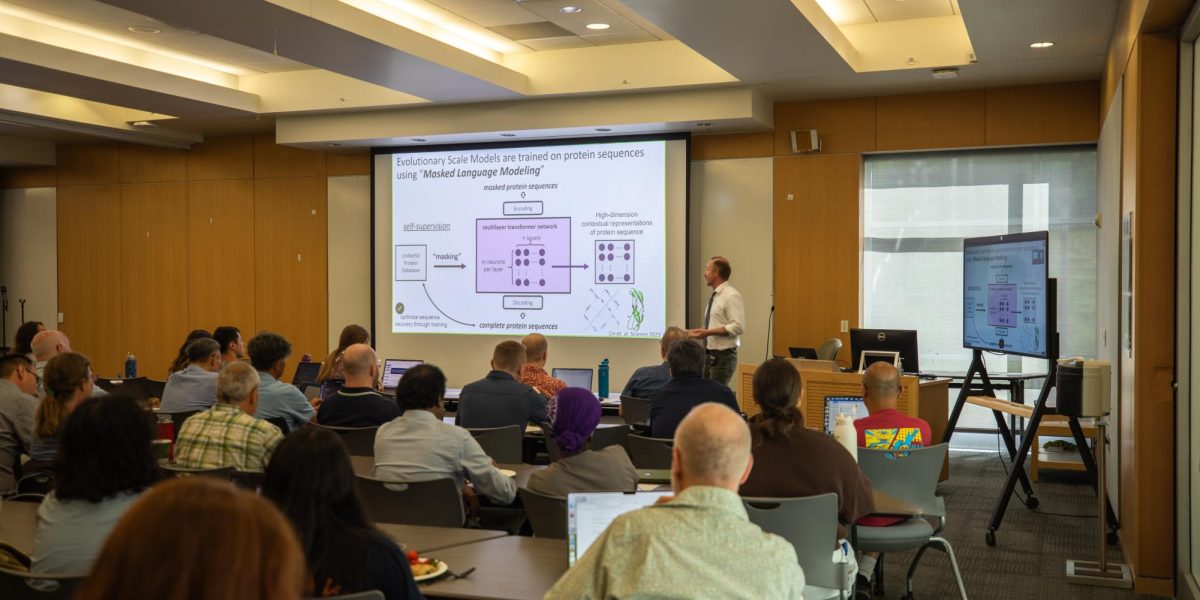
The university hosted the AI in Protein Structure, Function and Discovery Symposium on June 25, bringing together experts from around the world to discuss the latest advancements in this field. Keynote speakers included Dr. David Baker, University of Washington, and Dr. Jeffrey Kelly, Scripps Research, along with over 20 researchers from the University of Utah and beyond.
Proteins are complex molecules that play a crucial role in our bodies, from fighting off infections to regulating hormones. However, understanding their structure and function can be a daunting task, often taking years of research and experimentation. AI has emerged as a powerful tool to accelerate this process.
The symposium showcased recent developments in AI-powered protein structure prediction, function prediction, and discovery. Researchers demonstrated how AI can quickly analyze vast amounts of data, identifying patterns and relationships that may have gone unnoticed by human scientists. One example was the use of AlphaFold 2** algorithm**, which has been shown to accurately predict protein structures with unprecedented accuracy.
What this means: AI is revolutionizing the field of protein research, allowing scientists to study complex molecules with unprecedented speed and accuracy. This breakthrough could lead to new discoveries and treatments for diseases, potentially saving countless lives. The University of Utah’s research is a testament to the potential of AI in accelerating scientific progress.
AI-Powered Breakthroughs
Researchers are applying AI to various aspects of protein research, including structure prediction, function prediction, and ligand discovery. Structure prediction, for example, involves predicting the 3D shape of a protein based on its amino acid sequence. AI-powered algorithms like AlphaFold 2 can achieve this with high accuracy, paving the way for a deeper understanding of protein function and behavior.
Function prediction, on the other hand, involves predicting the biological function of a protein based on its structure and sequence. AI can analyze large datasets to identify patterns and relationships that may indicate a protein’s function. Ligand discovery, another area of research, involves identifying small molecules that can bind to proteins, potentially modulating their activity.