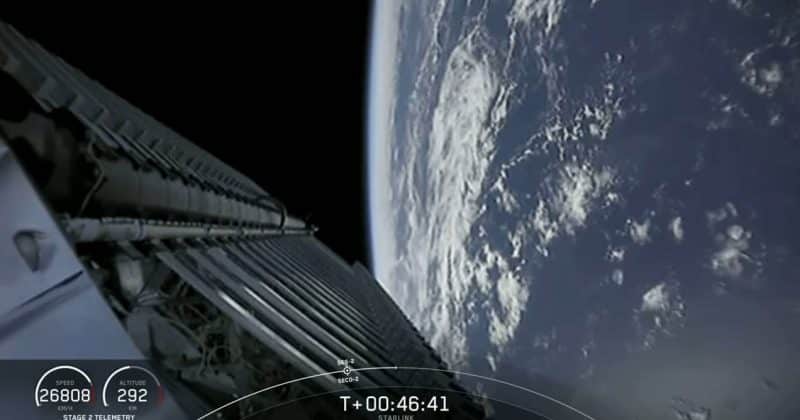
SpaceX plans to launch Starmind, an AI network that will be powered by a massive network of satellites in orbit.
The ambitious project, spearheaded by Elon Musk, aims to deploy up to 1 million AI-processing satellites in low Earth orbit, effectively turning space itself into a distributed data center. This massive AI infrastructure will allow for exponentially faster and more efficient processing of data, potentially revolutionizing industries from finance to healthcare.
How Starmind will work
According to reports, the Starmind network will comprise a constellation of satellites that will be equipped with AI processors and high-speed data transmission capabilities. These satellites will be capable of performing complex calculations and data analysis, allowing them to process large amounts of information in real-time.
The data collected and processed by the Starmind network will be transmitted back to Earth, where it will be analyzed and used to make predictions, drive decision-making, and optimize various systems. This will enable companies and organizations to make faster and more informed decisions, leading to improved efficiency and productivity.
Regulatory hurdles and technical challenges
However, the Starmind project faces significant regulatory, logistical, and technological challenges in its ambitious execution. Regulatory bodies will need to establish rules and guidelines for the deployment and operation of such a massive satellite network, ensuring that it complies with international law and safety standards.
Technologically, the project will require significant advancements in satellite design, AI processing, and data transmission to make it feasible. Furthermore, the launch and deployment of 1 million satellites will require significant resources and infrastructure, posing logistical challenges that are yet to be overcome.
What this means for the future of AI
The success of the Starmind project will have significant implications for the future of AI. If successful, it will demonstrate the potential of space-based AI processing and set the stage for a new era of decentralized, distributed computing. This could lead to the development of new AI applications and industries that are not currently possible with traditional computing infrastructure.