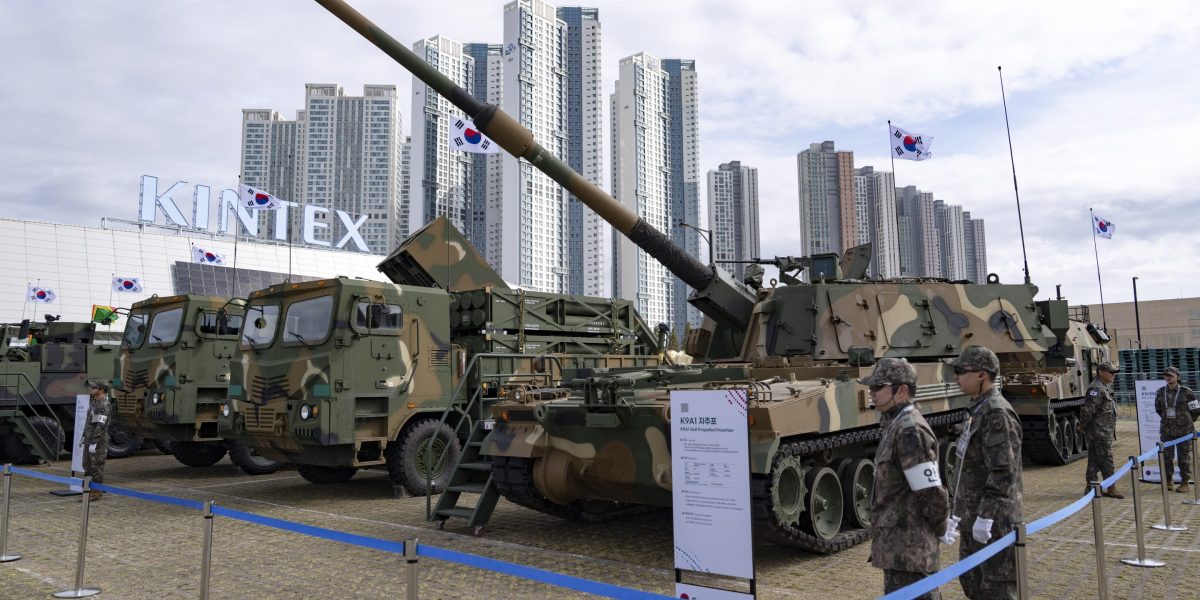
A new era of arms trading is unfolding in Asia, with the continent’s rapidly growing defense markets rewriting the rules of the global supply chain.
For decades, arms sales went in one direction: The U.S. and Western Europe designed and supplied the world’s most advanced weapons, and Asian countries bought them. But that flow is quickly reversing, with Asian countries increasingly investing in their own defense industries and developing cutting-edge military capabilities.
Rise of Asian Defense Giants
China, Japan, and South Korea have become major players in the global defense market, with significant investments in research and development, manufacturing, and exports. China’s defense budget has surged over the past few years, with a record $292 billion allocated for 2022. This has enabled China to become a major exporter of military equipment, with sales to countries like Pakistan and Myanmar.
Japan and South Korea have also made significant strides in defense production, with a focus on high-tech areas like stealth technology and advanced electronics. Japan’s defense budget has increased by 4.2% annually since 2013, reaching a record $51.6 billion in 2022. South Korea’s defense budget has also seen steady growth, reaching $43.1 billion in 2022.
Global Implications
The shift in the global arms supply chain has significant implications for the world’s major defense powers. The U.S., in particular, is feeling the pressure, with Asian countries increasingly looking to develop their own defense capabilities and reduce their dependence on Western suppliers.
As Asian countries become more self-sufficient in defense production, they are also developing their own standards and regulations for defense exports. This has the potential to create new opportunities for defense exports and cooperation between Asian countries, as well as new challenges for Western suppliers.
What this means
The rise of Asian defense giants is rewriting the rules of the global arms supply chain. As Asian countries invest in their own defense industries and develop cutting-edge military capabilities, they are becoming major players in the global defense market. This shift has significant implications for the world’s major defense powers, and is likely to continue shaping the global defense landscape for years to come.
For Western suppliers, this means adapting to a new reality in which Asian countries are increasingly looking to develop their own defense capabilities. For investors, it means opportunities in emerging defense markets, particularly in high-tech areas like stealth technology and advanced electronics.