A hundred or so years ago, there was a problem. People were typing at breakneck speeds, their fingers flying across mechanical keyboards, only to produce typos and errors due to their frenetic pace. Sound familiar? That was the world of typists just before the advent of the QWERTY keyboard layout, designed specifically to slow down typing speed to prevent keys from jamming.
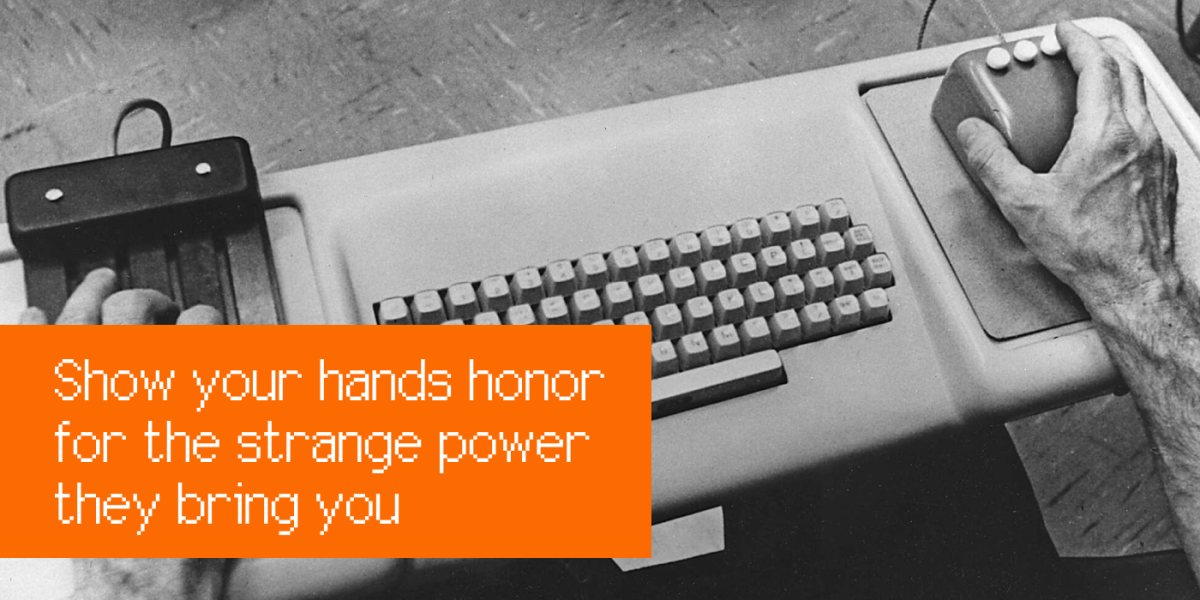
Fast-forward to today, and we’re facing a similar problem with our interfaces. Marcin Wichary, a designer and writer, recently explored this issue in an interactive essay, demonstrating all the ways interfaces can interfere with our motor skills. In an era of touchscreen devices and gesture-based controls, our fingers are constantly interacting with screens, but with a price: our motor skills are suffering.
Finger-Friendly Interactions: A Missing Dimension
Wichary’s essay highlights the importance of finger-friendly interactions, an aspect of design that’s often overlooked in favor of more glamorous aspects like AI or augmented reality. By focusing on the physicality of user interfaces, designers can create experiences that are not only more intuitive but also less likely to cause harm to our motor skills.
One example of this is the widespread adoption of swipe gestures. While they’re convenient, they require users to perform repetitive, precise movements that can lead to fatigue, particularly on smaller screens. Similarly, pinch-to-zoom and tap-to-select interactions can be taxing on the fingers, especially for users with pre-existing conditions like arthritis.
What This Means: Designing for Motor Skills
So, what does this mean for designers and developers? It means considering the physical implications of their creations, long before they’re released to the public. By prioritizing finger-friendly interactions, they can create experiences that are not only more enjoyable but also safer for users. This might involve experimenting with different input methods, such as voice assistants or gesture-free interfaces.
Ultimately, Marcin Wichary’s work serves as a reminder that good design is not just about aesthetics or functionality but also about the well-being of users. As we continue to develop and interact with increasingly complex interfaces, we must prioritize the physical aspects of our interactions, lest we create a new generation of typists suffering from finger fatigue.
Designing for the Future
Wichary’s essay offers a glimpse into a future where interfaces are designed with motor skills firmly in mind. It’s a future where users can interact with devices without sacrificing their physical comfort. By acknowledging the importance of finger-friendly interactions, designers can create a world where technology and human well-being go hand-in-hand – literally.