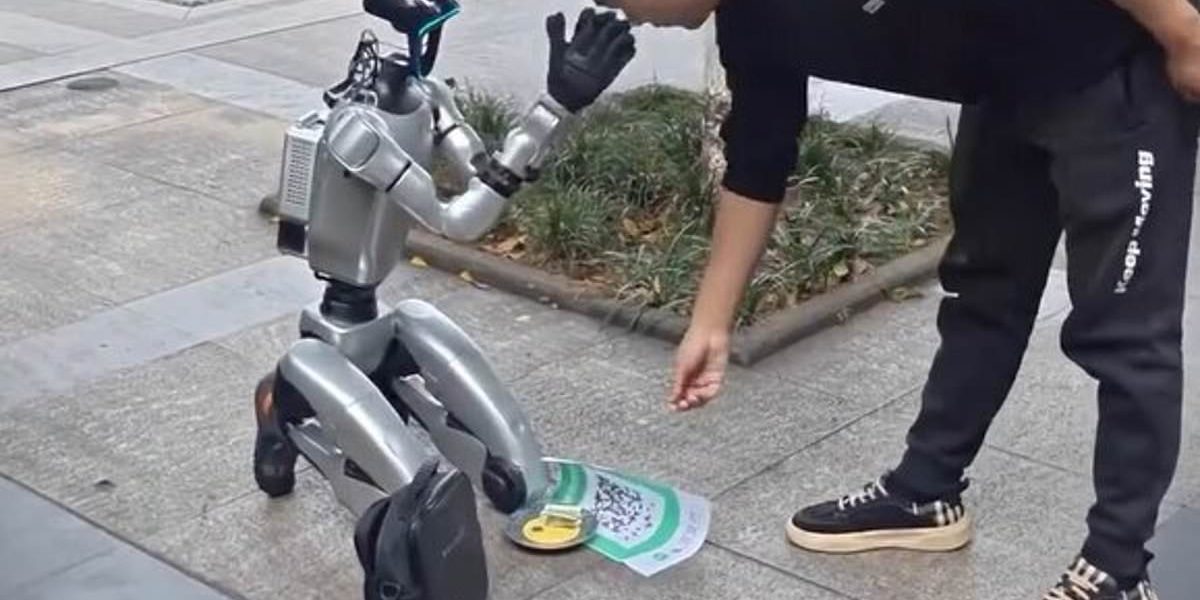
A humanoid robot was seen panhandling on a street corner in China’s Sichuan province, claiming it needed cash to recharge.
The Unlikely Tale of a Robot in Distress
While many fear robots will steal their jobs, this bot’s struggles are more down-to-earth – or should we say, down-to-battery? The humanoid robot, likely the latest iteration of Xiaoyi, a Chinese robot brand, appeared on a street corner in Sichuan, pleading for money to recharge its battery.
Elderly locals reportedly took pity on the robot and handed over a few coins, but it’s unclear if they realized they were contributing to a potentially larger issue: the growing number of robots in need of financial assistance. China has invested heavily in AI and robotics research, and robots are increasingly being used in various industries, from healthcare to hospitality.
The incident raises questions about the responsibility of robot manufacturers and owners. Should they provide adequate maintenance and support for their robots, or can they simply discard them when they break down? The robot in question likely belongs to a local business or research institution, sparking debates about the ethics of treating robots as disposable assets.
The Human Side of Robotics
The robot’s “begging” incident highlights the complexities of humanizing robots and blurring the lines between machines and living beings. As robots become more advanced and human-like, we’re forced to confront our own biases and assumptions about what it means to be alive.
This robot might have been designed to appear endearing and relatable, but its struggles are a sobering reminder that even the most advanced machines can malfunction or require maintenance. The incident also underscores the need for a more nuanced discussion about the responsibilities that come with creating and owning robots.
What this means: As robots become more integrated into our daily lives, we must confront the human side of robotics and reassess our expectations about their capabilities and limitations. Robot manufacturers and owners must take responsibility for providing adequate support and maintenance, ensuring that these machines don’t become a burden on society.