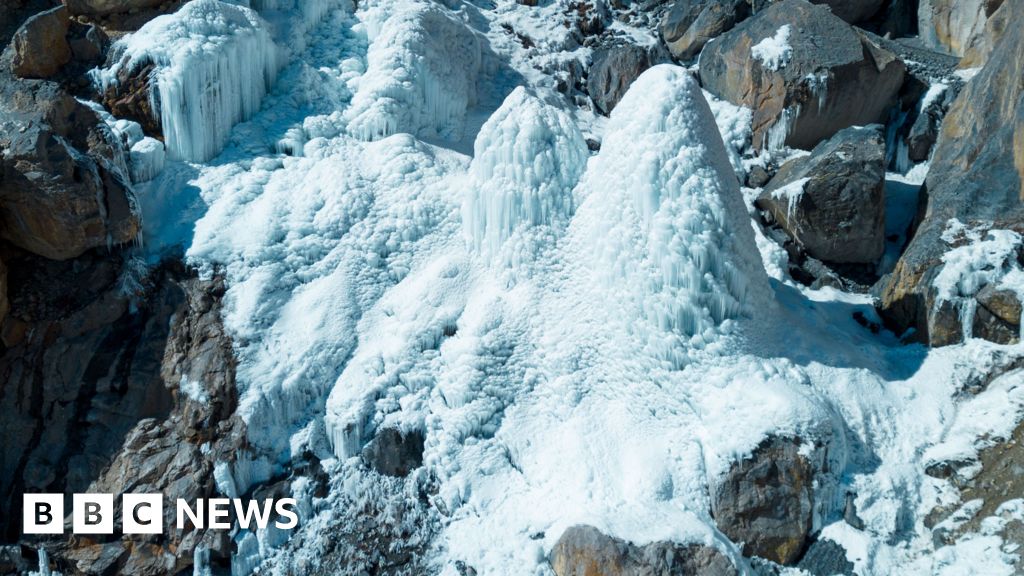
Artificial Ice Pyramids to the Rescue in Indian Villages
Villages in the Indian Himalayas are turning to artificial glaciers to ensure water for their crops during the spring, as traditional water systems are failing them. These man-made ice pyramids, created by stacking rocks around a central core, can store water and release it as the weather warms up.
Engineers in Leh-Ladakh, a region prone to drought, have been developing this innovative solution to combat water scarcity. According to Murtaza Ali, executive engineer in the Irrigation and Flood Control department, “grassroots hydraulic engineering” is becoming increasingly important in the region.
The Science Behind the Artificial Glaciers
The process of creating these artificial glaciers is straightforward. A core of rocks is surrounded by a wall of stones, and water is poured into the center. As the water freezes, it expands and pushes the rocks apart, creating a structure that resembles a pyramid. This design allows the water to be released slowly as the temperature rises, providing a steady supply of water during the dry spring months.
The effectiveness of these artificial glaciers has been proven in the field, with some structures lasting up to two years. While they may not be a permanent solution to water scarcity, they offer a reliable short-term fix for communities in need.
What This Means
The artificial ice pyramids are a testament to the resourcefulness and ingenuity of communities facing water scarcity. This grassroots approach to hydraulic engineering can serve as a model for other regions struggling with similar issues. By leveraging local knowledge and materials, villages can create their own solutions to ensure access to this vital resource.