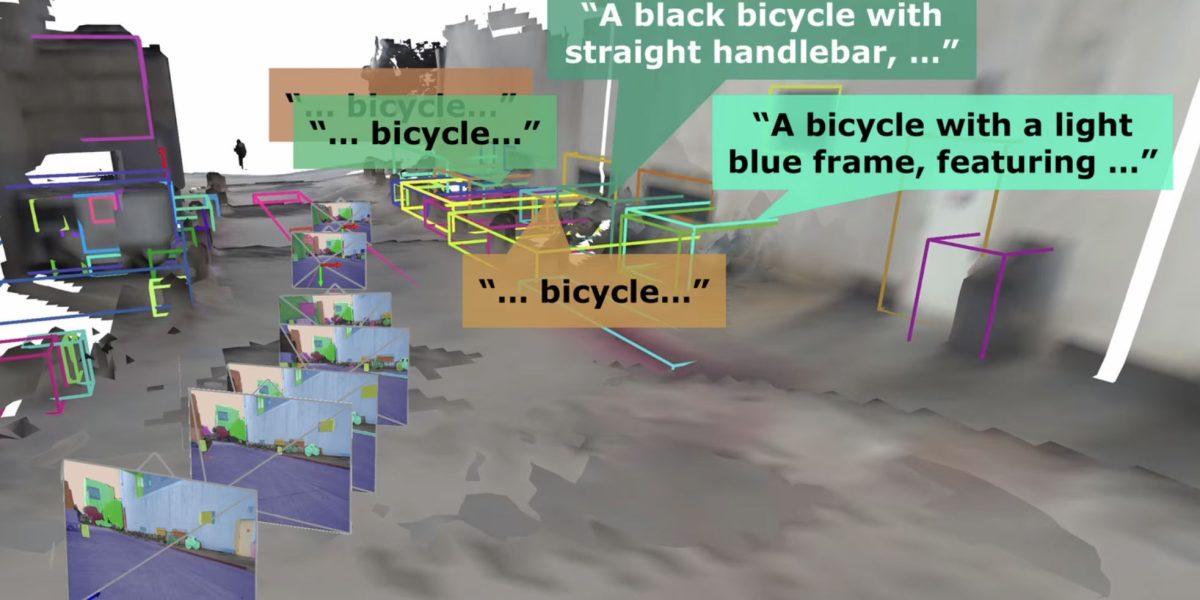
Robots are getting better at remembering where they’ve been and what they’ve seen, thanks to a new AI framework that could help them recall rich details about objects and locations in their environment.
A New Framework for Better Memory
A research team has developed a memory framework called DAAAM (Distributed Attention-based Associative Autonomous Memory) that enables robots to rapidly recall precise locational information and rich descriptions of objects they’ve encountered. This efficient approach could help robots like those used in factories, warehouses, or even your home quickly answer questions about their surroundings.
For example, imagine an auto factory worker who can’t find a partly assembled component she left on the production line. With DAAAM, a robot could recall the storage bin where the component was left and quickly return to that spot to retrieve it. This ability to remember specific locations and objects could greatly improve the efficiency of robotic assistants in various settings.
How DAAAM Works
The DAAAM framework uses a combination of attention mechanisms and associative memory to store and retrieve information. It can learn the relationships between objects and locations in its environment, allowing it to recall precise details about where things are. This is a significant improvement over existing memory frameworks, which often struggle to store and retrieve rich information.
The researchers behind DAAAM have successfully tested the framework in simulations and on a physical robot. The results show that DAAAM can quickly and accurately recall information about objects and locations in its environment, even in complex and dynamic scenes.
What this Means
DAAAM’s ability to improve robotic memory and recall could have significant implications for various industries and applications. For example, in manufacturing, robots could learn to quickly find and retrieve tools or parts, reducing downtime and increasing productivity. In healthcare, robots could remember patient information and medical history, allowing for more personalized care. And in the home, robots could learn to remember where family members left their keys or other important items.