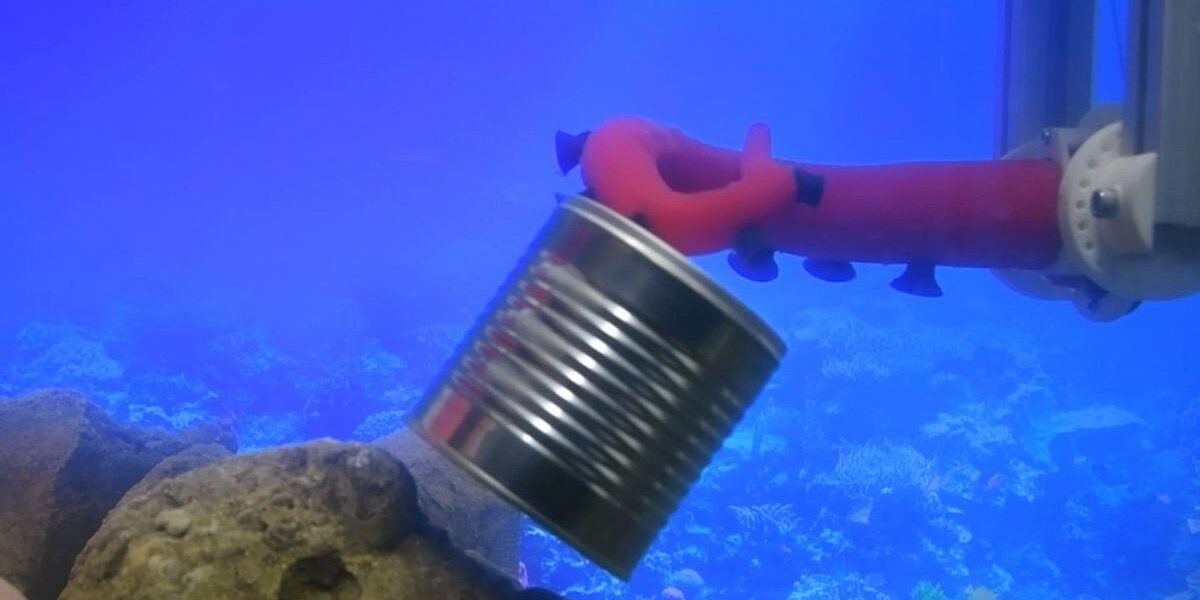
Meet the Octo-bot: An AI-Powered Robo-arm for the Ocean’s Murkiest Depths
The ocean floor is a tough place to explore, with unpredictable currents, limited visibility, and constantly shifting terrain. To tackle these challenges, researchers have created an octopus-like robot arm, designed to think and adapt with its suckers.
Called the “SoftBody” robot, this innovative device uses a decentralized AI system, spread across its many suckers, to navigate the complexities of the ocean floor. Unlike traditional robots, which rely on pre-programmed movements and centralized processing, the SoftBody robo-arm can adjust its grip, release, and movement on the fly.
Developed by researchers at the University of California, San Diego, the SoftBody robot is part of a larger effort to create more agile and adaptable underwater exploration systems. According to Dr. Julia Wright, lead researcher on the project, “Our goal is to make robots that can move and interact with the seafloor in ways that are more like animals, rather than rigid machines.”
The Power of Decentralized AI
One of the key innovations behind the SoftBody robot is its decentralized AI architecture. By distributing processing power across multiple nodes – in this case, the suckers – the robot can react quickly and autonomously to changing conditions.
This approach is inspired by the biology of octopuses and other soft-bodied sea creatures, which use distributed sensing and control systems to navigate their environments. By mimicking this approach, the SoftBody robot can adapt to new situations and learn from its experiences, making it a more effective and efficient explorer of the ocean floor.
What this means
The SoftBody robot represents an important step forward in the development of underwater exploration systems. By creating robots that can think and adapt with their “suckers,” researchers can unlock new possibilities for oceanic discovery and exploration.
For scientists studying marine ecosystems, this technology could enable more detailed and nuanced observations of oceanic life. And for industries like offshore energy and marine construction, it could lead to more efficient and effective operations in the often-hostile environment of the ocean floor.