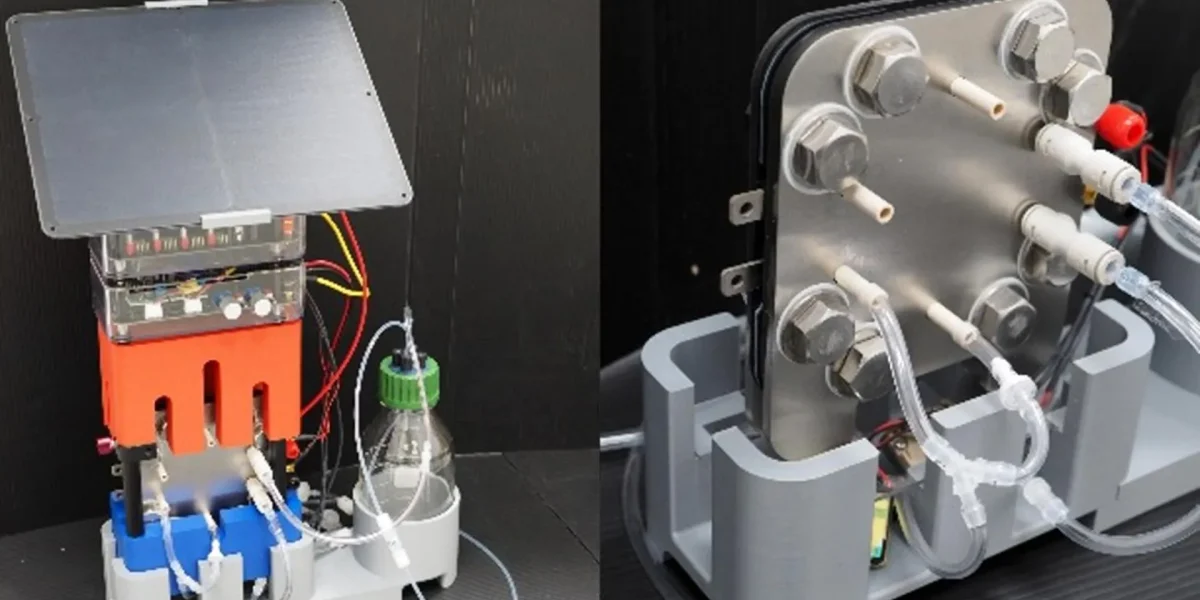
Researchers at Osaka Metropolitan University have created a battery-free device that converts sunlight directly into fuel, a feat that could potentially revolutionize the field of clean energy.
The Breakthrough
The scientists developed an artificial photosynthesis system that uses an electrolyzer to split water into hydrogen and oxygen, mimicking the process of photosynthesis in plants.
An electrolyzer is a critical component in artificial photosynthesis systems, as it’s responsible for converting sunlight into chemical energy. However, traditional electrolyzers require precise temperature control, which can be challenging in real-world applications.
This is where the innovation comes in – the researchers developed a self-regulating electrolyzer that can automatically adjust to changing sunlight conditions. This means the device can operate efficiently even when the sun’s intensity varies, eliminating the need for battery-based control equipment.
How It Works
The self-regulating electrolyzer uses a complex system of sensors and algorithms to monitor the device’s performance and adjust its settings accordingly. This allows the electrolyzer to maintain optimal operating conditions, even when the sunlight intensity changes.
The researchers employed a sophisticated approach, incorporating machine learning algorithms to optimize the electrolyzer’s performance. They used a combination of theoretical modeling and experimental validation to calibrate the system and ensure its stability.
What This Means
This breakthrough has significant implications for the development of sustainable energy technologies. With a device that can convert sunlight into fuel without the need for batteries, researchers can focus on large-scale implementation and commercialization.
Imagine a future where solar panels are not just for generating electricity, but also for producing fuel for transportation, heating, or even industrial processes. The potential for widespread adoption is immense, and this innovation could pave the way for a greener, more sustainable energy landscape.
This achievement by the researchers at Osaka Metropolitan University serves as a testament to human ingenuity and the relentless pursuit of innovation. By harnessing the power of sunlight and artificial photosynthesis, we can create a more sustainable future for generations to come.