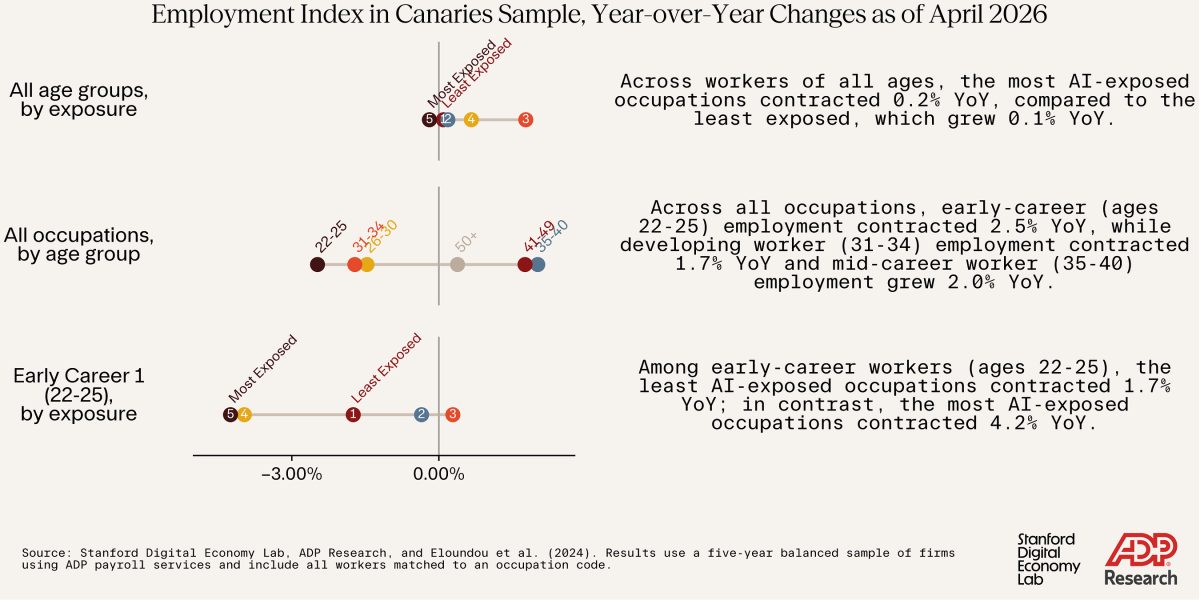
Stanford University researchers have just launched the AI Economic Indicators, a pioneering platform that tracks the economic impact of artificial intelligence. The platform’s first set of indicators is live at indicators.stanford.edu, offering data on how AI is changing labor markets, driving economic growth, and shaping technology adoption.
The Stanford Digital Economy Lab, a research powerhouse at the heart of Silicon Valley, has been working on this project for years. Their goal: to provide a neutral, fact-based understanding of AI’s effects on the economy. This is no small task, given the rapid pace of innovation and the often-fuzzy nature of AI’s influence.
The Numbers Matter
The AI Economic Indicators platform offers three key metrics: job displacement, productivity growth, and technology investment. Researchers have been tracking these numbers since 2015, and the data is available for download in a user-friendly format. The platform also includes visualizations and interactive tools to help users explore the data in more depth.
One notable finding from the initial data release is that AI has been responsible for a significant increase in productivity growth over the past decade. According to the platform, this boost in productivity has contributed to a 2.5% increase in GDP growth. However, the data also suggests that job displacement has been a more complex issue, with AI-related job losses occurring primarily in sectors where tasks are routine or can be easily automated.
What this means
The AI Economic Indicators platform offers a valuable resource for policymakers, business leaders, and anyone interested in understanding the economic implications of AI. By providing a clear and transparent picture of AI’s impact, the platform can inform more informed discussions about the role of AI in the economy and help mitigate potential negative consequences. Ultimately, this data will help us make better decisions about how to harness AI’s potential while minimizing its risks.
As the platform continues to evolve and incorporate new data, it will be interesting to see how the numbers change. Will AI continue to drive productivity growth, or will we see a shift in its impact as more industries adopt automation technologies? One thing is certain: with the AI Economic Indicators platform, we’ll have a much clearer picture of what’s really happening.