MIT Researchers Use AI to Train Robots with Human Muscle Movements
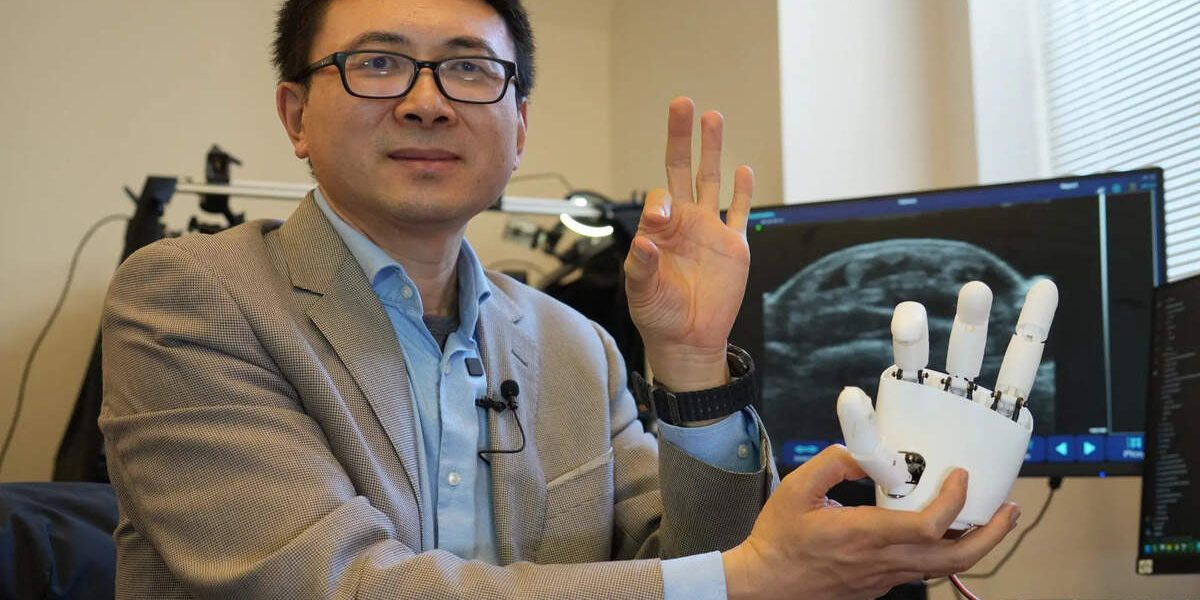
MIT researchers have developed an innovative ultrasound wristband that captures human muscle and tendon movements, effectively channeling AI to turn hand gestures into robot training data. This breakthrough technology could revolutionize the way robots learn to perform tasks requiring fine hand control.
The wristband uses ultrasound waves to image the human wrist, tracking the movement of muscles, tendons, and ligaments beneath the skin. This data is then used to train robots, allowing them to grasp objects with precision.
One of the biggest challenges in robotics is achieving fine hand control. Robots struggling to grasp objects often result in dropped items or even worse, damage to the object or surrounding environment.
The MIT wristband solves this problem by providing robots with accurate and detailed training data. By capturing human muscle and tendon movements, the wristband allows robots to learn from the human body, enabling them to develop the precision and control needed to perform complex tasks.
What This Means
This technology has significant implications for various industries, including manufacturing, healthcare, and logistics. Imagine robots capable of grasping and manipulating delicate objects with precision, or assisting surgeons during complex procedures.
The MIT researchers’ innovative use of AI to train robots is a significant step forward in robotics. By harnessing the power of human movement, they’ve created a more efficient and effective way to train robots, paving the way for a future where humans and robots can work together in harmony.
As the field of robotics continues to evolve, we can expect to see more innovative applications of AI and machine learning. The possibilities are endless, and the future of human-robot collaboration looks brighter than ever.