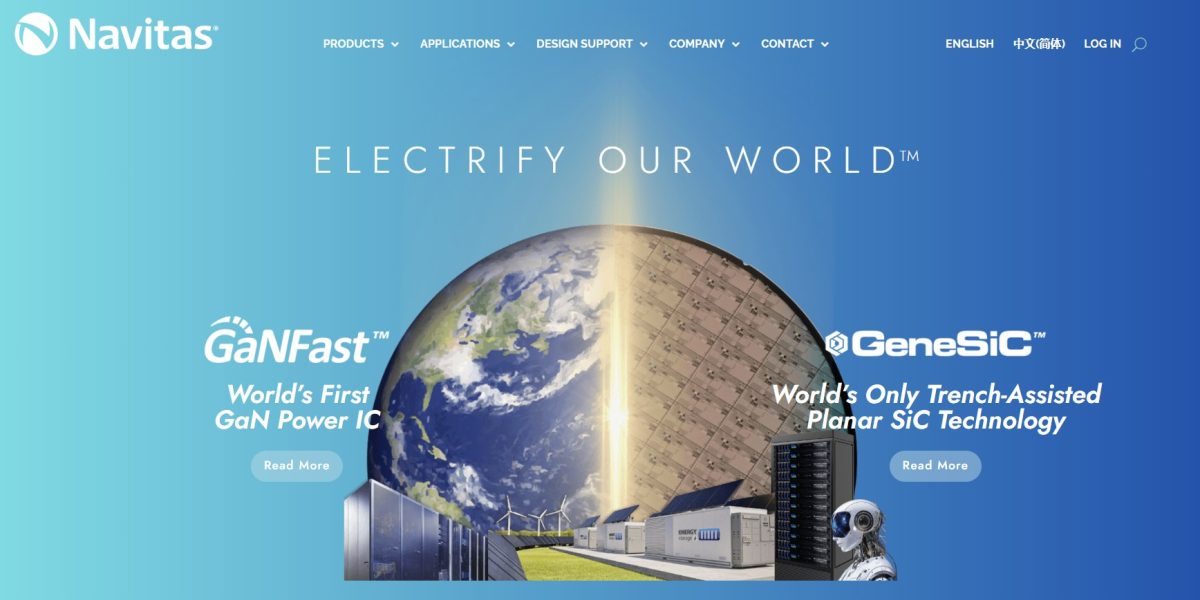
New York-based Navitas Semiconductor Corp. saw its shares tick up 0.94% to $25.32 on Monday morning, as investors continue to show interest in the company’s gallium nitride (GaN) power semiconductor technology.
A New Era for High-Performance Computing
Navitas Semiconductor’s GaN tech is gaining traction in AI, electric vehicles, and data centers. This growth is driven by the need for more efficient and compact design solutions, which GaN technology uniquely provides. Key players in the industry are adopting GaN to power their products, from AI data processing to electric vehicle charging systems.
GaN technology is a significant improvement over traditional silicon-based semiconductors. It offers higher power density, reduced energy losses, and faster switching speeds – all critical factors in high-performance computing applications like AI and data centers. The increased efficiency and reduced heat generation also make GaN technology more suitable for electric vehicles, where space and weight are at a premium.
A Growing Market for GaN Tech
Navitas Semiconductor is well-positioned to capitalize on the growing demand for GaN technology. The company has been at the forefront of developing GaN power semiconductors, offering a range of products that cater to various applications. With key industry players adopting GaN tech, Navitas is poised to benefit from the increasing demand.
Navitas’ shares have been on an upward trajectory in recent months, reflecting investor confidence in the company’s prospects. As the demand for GaN technology continues to rise, investors can expect Navitas to be a key player in the industry.
What this means for investors
For investors, Navitas Semiconductor’s growth prospects are worth keeping an eye on. The company’s shares may continue to rise as demand for GaN technology increases. However, investors should remain cautious and do their own research before making any investment decisions. With the AI era driving the adoption of GaN tech, Navitas is likely to be a key player in the industry for years to come.