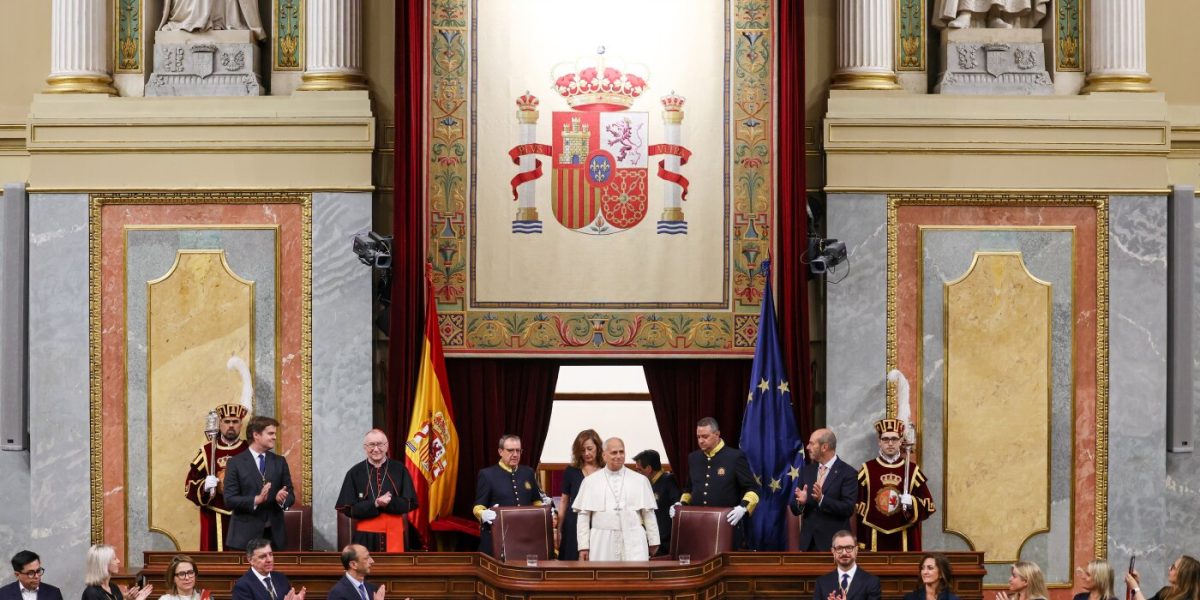
Pope Leo XIV Calls for Moral Renewal in Government
A moral reckoning in politics, and what it means for migrants and the vulnerable
Pope Leo XIV, the first American to hold the position, just asked lawmakers in Spain to treat people like people – not just as statistics or policy problems. During a historic address to the Spanish parliament, he emphasized the need for a “moral renewal” in government and public life.
The Pope’s words were a call to action, urging lawmakers to respect the inherent dignity of all people, regardless of their background or status. He specifically highlighted the need to treat migrants with greater respect and dignity, acknowledging the challenges they face in seeking a better life.
Pope’s Message Rings Out in a Time of Growing Migrant Crisis
The Pope’s remarks come as many countries struggle to cope with the influx of migrants and refugees. From the Americas to Europe, governments are grappling with how to balance the need to protect their citizens with the moral obligation to help those seeking safety and opportunity.
Pope Leo XIV’s message is a timely reminder that people are not just statistics or policy problems – they are human beings deserving of respect and dignity. As governments face these challenges, they must remember that their decisions have real-world consequences for individuals and families.
What this means: A moral compass for policymakers
The Pope’s words are not just a moral appeal – they also serve as a practical guide for policymakers. By prioritizing the dignity of all people, governments can create more humane and effective policies that address the root causes of migration and support the most vulnerable members of society.
The Pope’s message is a call to action for policymakers to put people first – to see beyond the headlines and statistics, and to recognize the inherent worth and dignity of every human being. As governments continue to grapple with the complexities of migration and global governance, Pope Leo XIV’s words offer a moral compass that can guide them towards a more compassionate and equitable future.